(Hulu/hoopla/TNT) The closest thing to misfit neo-noir TV has seen in years. While the show is loosely based on Blake Crouch’s* Letty Raines series of heist novellas, it improves on it in every way: the show sees Letty (played with gusto and a wavering American accent by DOWNTON ABBEY’s Michelle Dockery) as a conflicted, stubborn addict slowly trying to improve herself and her life, but keeps making terrible life decisions, including falling for a hitman (handsomely played Juan Diego Botto).
It’s a surprisingly emotionally grounded show that balances conflicted romance with pulpy plotting. Also, the chemistry between Dockery & Botto is off the goddamn charts.
The second season becomes a tad too convoluted and ends on a a major cliffhanger, and then the show was canceled so, if you’re the type easily frustrated by open endings, this probably isn’t the series for you. There’s been talk of a TV movie to give closure but, given the world nowadays, that’s unlikely to happen.
S1 trailer:
S2 trailer:
“Can I give you a bit of relationship advice? The only thing you can change about a man is his hair.” “…I like his hair.”
Blake Crouch is also responsible for the WAYWARD PINES trilogy. Similarly, the show improved on the source material.
(fubo/Hulu/tubi/VOD) Yes, everyone’s celebrating Amy Sherman-Palladino and THE MARVELOUS MRS MAISEL now, but everyone outside of my wife and maybe a few friends, had largely forgotten her once GILMORE GIRLS went off the air in 2006.
Enter 2012: I vividly remember walking with some folks through a mall to catch a Bollywood film in the Chicago suburbs, and there was a BUNHEADS poster front-and-center between us and the theater, and one dude I was attending the screening with lambasted the poster; ridiculed it. I was a coward, half-heartedly chuckling at his jokes, but inwardly very angry.
It hadn’t aired yet and yes, GILMORE GIRLS has -a lot- of issues, I won’t deny that (especially the Netflix mini — yikes) but Amy Sherman-Palladino has done far more good than harm. And this dude was mocking a poster because it dared to promote a TV show about girls & dance, -while- we were heading to see a frickin’ Bollywood film.
Setting that aside: BUNHEADS is the story of failed ballerina/current Vegas showgirl Michelle Simms (Broadway star Sutton Foster who you may know her better as the lead in YOUNGER, and I really had hoped I’d be watching her on-stage with Hugh Jackman in THE MUSIC MAN right now, but so it goes) who drunkenly latches onto Alan Ruck one night, marries him, moves to a sleepy California town, and then Ruck dies. Simms then falls into teaching at Ruck’s mother-in-law’s (played by GILMORE GIRLS’ Kelly Bishop) dance studio.
While Michelle has a fair amount of drama, the show is far more concerned with the stakes regarding the girls she’s mentoring, and really, it’s about their stories and experiences, and how Michelle helps to guide them through life, despite being a bit of a fuck-up.
It’s quintessential Sherman-Palladino work: sweet, smart, overly verbose, and extremely well-produced (albeit, yes, extremely white). The following numbers below should sell you on the show alone. Why yes, I’ll take a musical dance number inspired by Tom Waits’ Mule Variations!
If you’re a sound nerd, I love how they mic the floors (see Dance Routines Part 2, ~1:30), so you hear every landing, every hit, every slap. I’m hard-pressed to think of a show that was as aurally tactile as this.
If you’re a cinematography nerd, goddamn, the cheats they employed to ensure that the mirrors were always seen, but never the cameras? Blows my mind. And the China Balls!
BUNHEADS had a little something for everyone, and it’s a crime how ABC Family buried it. I’m hoping Amy Sherman-Palladino will revisit it in the future although, granted they did film a farewell dance as a way to give closure, I’d still love to see a reunion special.
(DVD/YOD) You may be familiar with the Hollywood film PENNIES FROM HEAVEN (1981), starring and ushered into existence by Steve Martin, but it’s based on a six-ep British series penned by Dennis Potter. To be fair to Martin, the film sticks very closely to the original series, but the Hollywood gloss gets in the way, to the point where the film can’t see the premise for the trees. For example:
Potter’s ‘Yes, Yes’:
Martin’s ‘Yes, Yes’:
But I’m getting ahead of myself. PENNIES FROM HEAVEN is an incredibly unsavory lip-synced jukebox musical that takes place in the 1930s about a man’s midlife crisis — Bob Hoskins as Arthur Parker, portrayed Willy Loman style — and the women he leaves in his wake. On paper, it’s not terribly appealing, partially because Potter frames Arther as a noir hero, eschewed by his wife (and therefore, society) because of his sex drive (https://www.youtube.com/watch?v=duIlaVlLwX4&list=PL10169BEFFBF3C1B6&index=14 ). However, Potter’s women are far more fascinating than Arthur, and the musical numbers still resonate, well over 40 years later. Take for example, Arthur’s paramour, teacher Eileen:
Potter’s ‘Love is Good for Anything that Ails You’:
Martin’s ‘Love is Good for Anything that Ails You’:
What’s dictated via Hollywood’s PENNIES FROM HEAVEN — no offense to Bernadette Peters’ performance — is the longing, the frustration, the thrill in letting loose. It’s all spelled-out. Contrast it with Potter’s number, where it’s all simply acted out through Cheryl Campbell’s amazing performance.
And here’s a number featuring Arthur’s long-suffering wife. (The number doesn’t appear in Martin’s film.)
Potter’s ‘You Rascal, You’:
If you aren’t into 20s/30s era American Jazz or post WWI British miserabilia, this probably isn’t a series for you, but if you’re into either one, hunt down a copy.
(fubu/tubi/Vudu) Following in the footsteps of MARY HARTMAN, MARY HARTMAN was this gonzo satire of soap operas created by Susan Harris (an already established writer from LOVE, AMERICAN STYLE, and who would go one to create THE GOLDEN GIRLS). Difference was, this was explicitly comedic, and weekly. The cast was stacked: Katherine Helmond, Richard Mulligan, Robert Guillaume, a young Billy Crystal (a rare recurring gay character*), and more.
Far more screwball than practically anything else on the air at the time, the show aimed for laughs but still pushed the envelope far more than they needed to, and they pulled in loads of eyeballs! That’s why it was so shocking that, at the end of the third season, which features a jaw-dropping cliffhanger, the show was cancelled.
That didn’t stop ABC from producing spin-offs, though. If you’re a child of the 80s, you probably never realized that BENSON was born from SOAP.
If you’re a fan of ARRESTED DEVELOPMENT, you owe yourself to trace your television heritage back and watch this. (Mitch Hurwitz cut his teeth on GOLDEN GIRLS, and no doubt, ARRESTED DEVELOPMENT would not exist if it weren’t for SOAP.) It was well-ahead of its time, and it’s a crime that it’s mostly forgotten.
It’s worth noting that MARY HARTMAN, MARY HARTMAN had one of the first gay storylines on TV, but it didn’t last that long, whereas Crystal’s character did. Whether Crystal’s performance was a good thing is another question all together.
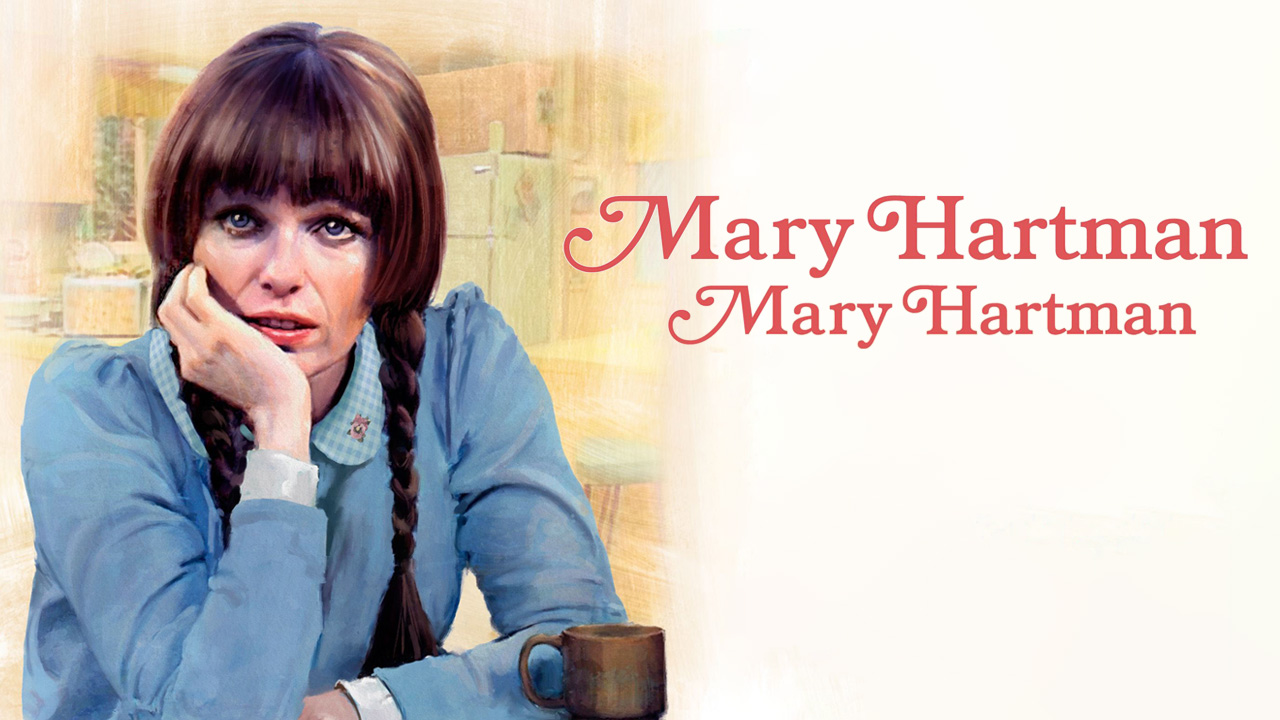
A breakout daily satirical soap conceptualized by Norman Lear, but shaped by Gail Parent, Ann Marcus and Joan Darling, focused around a severely dysfunctional family and their titular wife, Mary Hartman (played by Louise Lasser), whose life of constant stress and anxiety and insecurity builds to a crescendo of a nervous breakdown. It’s a severely intelligent, often hilarious, self-critical melodrama about domesticity, consumer culture, American media & existentialism that’s just as relevant now as it was when this was first broadcast.
The show nailed its tone out of the gate, as you can see with the infamous ‘Waxy Yellow Buildup’ series opener:
(I really wish SHOUT! featured a longer clip, as the first half of the premiere is amazing. The show quickly picked up its pace, but kept its oft-putting, absurd sensibility, well before it was fashionable.)
It’s worth noting that MARY HARTMAN was a full-blown phenomenon, at least for its first year. If you’ve read the first TALES OF THE CITY (1978), you know that characters planned their days around the broadcast. Lasser was brought onto SNL to do a Mary Hartman bit, which allegedly resulted in her being banned from the show for erratic behavior.
The show was too smart, burned through too much plot, was too emotionally grueling and controversial to have any proper longevity, and it wrapped when Lasser bowed out at the end of the second season which, doesn’t sound like much, but those two seasons consisted of 325 half-hour episodes over the period of under two years.
If you’d like to read more about it (instead of watching all 325 episodes like I have), here are two great places to start:
In typical Lear fashion, a spin-off was born based on one of the odder characters, Barth Gimble, as FERNWOOD 2 NIGHT, and then reborn as FERNWOOD FOREVER, both tongue-in-cheek takes on local late night programming which are probably better remembered today than MARY HARTMAN is.
(DVD/YouTube) PROFIT has the dubious honor of ushering in the modern era of asshole male anti-heroes, despite the fact that practically no one watched it which resulted in it being cancelled having only aired four episodes (four more were aired on the late, lamented — at least by me — Trio channel, and are available on the very out-of-print DVD).
That said, critics loved it, despite the fact that the lead character — Jim Profit, yes that’s his name — is a cutthroat corporate man, willing to do anything to get ahead. The storytelling engine has him crushing a fellow employee (or just someone in his way), then celebrating by opening up a hilariously dated virtual reality app and shattering their poorly rendered 3D likeness.
On top of this, he has severe mental issues: he killed his father, slept with his mom (well, step-mother), and every episode ends with him climbing naked into a cardboard box to sleep.
While you might think that this would be played as a soap, no, it’s played straight as straight as can be, often with grizzled narration from Profit himself, occasionally even addressing the audience. It helps that Jim Profit, played by Adrian Pasdar, could turn on the charm in a way that few other TV anti-heroes have managed. (Gandolfini excepted, of course.)
At the time, there was nothing like it on air, which sadly seems to be why FOX briefly flirted with the idea of rebooting it. (Given the state of the world right now, it appears they’ve wisely realized that’s a terrible idea.)
I’m not going to say PROFIT was a great show, but it did have a lot of fantastic — albeit absurd — character work. Also, just about anyone reading this probably has loved one of the shows that creators John McNamara (THE MAGICIANS, JERICHO, BRISCO COUNTY JR.) or David Greenblatt (EUREKA, GRIMM, SURFACE) have been heavily involved with. (Also, both worked on ANGEL.)
While the entire series is difficult to find, the 90min pilot is available on YouTube, which should give you more than enough of a taste for the show.
(DVD) Sadly, there’s no way to stream this show, no way to digitally purchase any eps, and the DVDs are definitely costly, but I can’t talk about undersung TV shows without discussing MILLENNIUM.
MILLENNIUM was Chris Carter’s second FOX show, launched midway through X-FILES’ run. The first season was a severely grimdark and mostly lackluster procedural about Frank Black (Lance Hendrickson, giving it his all), a gifted profiler hunting down serial killers, with a mostly untouched framing device about the killers being obsessed with the upcoming millennium. I do not recommend the first season.
The second season was handed off to X-FILES alums Glen Morgan & James Wong — yes, the folks behind FINAL DESTINATION — and they reframe the show into a battle of Christian sub-sects — the Owls versus the Roosters — and they ramp up the ‘gifts’ that have been bestowed upon Frank Black in that he can see devils and angels, then they double-down on his family guilt by adding Darrin McGavin as his father. The show culminates in a ‘burn the fucking world down’ finale that Morgan & Wong surely thought would result in the show being cancelled, because they were fucking pissed off at FOX’s notes and knew they would not be invited back.
Not one, but two episodes of the second season were written by legendary TV writer (and Glen Morgan’s brother) Darin Morgan, probably best known for his X-FILES ep -Jose Chung’s ‘From Outer Space’-. Darin brings Chung back in Morgan’s -second- most memorable MILLENNIUM episode: -Jose Chung’s ‘Doomsday Defense’-, which is a must-see, and entertaining enough as a stand-alone.
For my money, Darin Morgan’s most memorable episode is -Somehow Satan Got Behind Me-, and it’s something special: four devils — literal devils — gather in at a donut shop in the early morning hours to discuss their latest accomplishments in corrupting humanity. That’s it, that’s the episode. It’s surprisingly melancholy and hits hard, and it deserves more attention.
The other facet MILLENNIUM S2 excelled at was silence. So many MILLENNIUM S2 episodes went five or more minutes without anyone saying anything, and the pinacle of this is with their Halloween episode, -The Curse of Frank Black-, in which ‘modern day’ Frank Black maybe utters 100 words, tops (most of which boil down to an argument with his tech sidekick as to whether the killer in SILENT NIGHT, DEADLY NIGHT is a spree killer or a serial killer). Instead, the score speaks for him.
What Glen Morgan & James Wong always excel at is infusing their scripts with the perfect song, usually via counterpointing or general sentimentality. Season two introduced so many classic artists and songs to my young mind: Terry Jack’s Seasons in the Sun (via -Goodbye Charlie-), the muzak of Love is Blue from Paul Mauriat (via -Room With No View-) and, most importantly, the goddamn entirety of Patti Smith’s Horses for a ten-minute scene in -The Time is Now Part 2-, which is paired with a no-budget experimental phantasmagoria that, as I watched it live in 1998 — imagine watching this on network TV in 1998 — dropped my jaw. I’ve still never seen anything quite like it on TV. (No spoilers concerning the link below — it’s mostly context-free.)
Morgan & Wong — predictably — were jettisoned after season two, and the third season rolled back their finale and, apart from the addition of Klea Scott as Frank’s new partner and a somewhat amusing Halloween episode, it limped along for 22 eps before being cancelled. There’s an epilogue episode in X-FILES’ seventh season (the fourth ep) but it’s perfunctory and lackluster.
Just stick with the second season and you’ll be fine.
(AMC+/SHUDDER/VOD) If you’re reading this, there’s probably a 50/50 chance you’ve watched THE HAUNTING and, if so, it’s well-worth a re-watch! If you haven’t? Well, that’s what these electronic missives are for!
THE HAUNTING (1962, not to be confused with the 1999 version, which isn’t as bad as you may remember) is probably the closest to a definitive Shirley Jackson adaptation we’ll ever get, and not just because she was actively involved with the adaptation. While it excises and condenses the book, it never loses track of the complexities of Eleanor, the figurehead of the story, wanting to be wanted, but unaware as to how she can be needed.
It helps that THE HAUNTING is shot with a pitch-perfect eye. Director Robert Wise (a goddamn Hollywood legend as the award-winning editor of CITIZEN KANE and director/producer of WEST SIDE STORY, THE SOUND OF MUSIC) and cinematographer Davis Boulton used an experimental Panavision 30mm lens that lends an unmistakably unique look to the film; the occasional lens distortion helps to amplify certain scenes near the end of the film.
The lens, in tandem with the claustrophobic and detailed sets and the intense lighting gives the house a verve (while often framing all of the primary characters as entrapped or jailed) that required almost absolutely no ‘traditional’ haunting visual effects, relying instead on perfect sound design, and all of it dovetails with the intense internal monologuing from Eleanor.
THE HAUNTING is a perfect Halloween film, one that’ll make you think about your surroundings as you lumber off to bed, all while questioning your own place.
(AMC+/hoopla/Prime/VOD) TEXAS CHAINSAW MASSACRE 2 has a similar reputation to its original as HALLOWEEN 3 has to the first two HALLOWEENs: fans felt betrayed. Both films toy with their hallmark villains (in the case of HALLOWEEN 3, Michael is nowhere to be found), neither film tries to repeat their prior efforts, and both look and feel drastically different from what fans expected. While HALLOWEEN 3 has finally been embraced by horror fans, TEXAS CHAINSAW MASSACRE 2 (TCM2) is still mostly ignored, which I believe is rather unfair.
TCM2 is unmistakably glossier and poppier — just take a listen to the soundtrack. And yes, it’s far broader than the original. In other words, far closer to the tone of similar 80s horror films, but there’s a reason for that.
Hooper and co-writer L.M. Kit Carson (co-writer of PARIS, TEXAS) are using TCM2 to actively undermine what Hooper created with TCM1, by putting a slapstick, circus-like veneer on the entire film. Texas, as a state, is reduced to a brightly colored carnival (Texas Battle Land, chock full of crass Alamo murals and poorly rendered re-enactments), the Sawyer family become a twisted Three Stooges, and Dennis Hopper is reduced to an short-sighted, idiotic buffoon, often over-compensating for his own weaknesses by taking up not one, but two chainsaws.
Is it puerile? Oh, most definitely — there’s even a scene where Leatherface (who quickly falls for our radio DJ heroine) ejaculates in his pants, then quickly becomes frustrated and tears up the radio station upon discovering this new sensation. New Sawyer family member Chop Top has a disgusting habit of picking the skin from around his skull wound with the hook of a clothes hanger and eating it.
Is it satire? I’m hard-pressed to say, but Hooper’s definitely undermining his original creation and having a lot of fun doing so. If they had replaced Leatherface and recast the Sawyer family and hadn’t sold it as a TCM sequel, I’m sure this film would be better regarded today. However, it’s questionable whether the film would have the same bite that Hooper intended if it weren’t billed as a Texas Chainsaw Massacre film, if it hadn’t pulled the rug out from fans’ feet.
(AMC+/fubo/VOD) I read a fair amount of King as a kid and, while I found much of it thrilling, I recall very little of it disturbing me (although the TV film adaptation of IT definitely kept me awake at night) except for one short story from his SKELETON CREW collection: THE MIST. I fully realize it wasn’t so much the story itself, but how the story let my imagination run wild with the fear of what’s unseen.
While Frank Durabont’s adaptation of THE MIST differs in many ways from the source material, it still reckons with the idea of ‘what’s the worst out there that we can’t see?’, taking it to the extreme with what you may feel is a controversial end. In-between the opening and that ending, you have your traditional small-town interpersonal conflicts and blow-ups, mostly structured within the space of a decently sized grocery store with overly spacious front windows.
It includes murderer’s row of fantastic performers, including Laurie Holden and Jeffery DeMunn (both pre-THE WALKING DEAD), Andre Braugher, and frickin’ Toby Jones, stylish shots and cracking sound and monster design, it’s one of those adaptations where everything coalesces into something special.
(By the way, there was a barely-promoted TV adaptation of THE MIST that aired on the now-defunct basic cable channel Spike in 2017. Unless you’re hardcore about comparing adaptations — like I am — you may want to skip it.)