This is an endless array of brilliant spoken words posited against an unrelenting series of industrial noises, escalating into an amazingly hooky guitar riff that matches perfectly with Thirlwell’s gruff voice, pausing only temporarily for a strange synth interlude.
“Fee. Fi. Fo. Fum. It takes two to tangle; it takes one to cum.”
“A pound of protection beats an ounce of lead.”
As with prior FOETUS songs, I prefer the MALE live version because of its more languid and refined pacing (until it escalates), but the studio version is still brilliant:
I love how cavalierly nostalgic and languid this song is until it isn’t. It luxuriates in reminiscence and makes me feel like Audrey Horne swaying in the Double R diner, until it escalates to a frenzied conclusion that is amazingly cathartic.
I prefer the live rendition presented via MALE but the original Wiseblood recording is damn fine as well:
(Worth noting this is the 12″ edition, not the original, nor the MALE version!)
Ostensibly, this is a musical historical re-enactment.
Except, it really isn’t. At least, not the way I hear it.
When I hear it, it’s nakedly about a romance spectacularly self-destructing.
“I’ll Meet You in Poland Baby” is quintessential FOETUS: all mannered orchestrations and programming and subversive authoritarian groundwork and a lot of emotions.
Similarly with the upcoming “Someone Drowned in My Pool”, I prefer the live MALE version, but really, every version is brilliant and worth listening to.
“TODAY IS FIRST OF SEPTEMBER! SEE YOU AT YOUR FUNERAL, BABY!”
Don’t take this title at face value; it’s more complex than it reads. It’s all about alcoholism and hiding your bullshit, a facet that Jim Thirlwell has struggled with for years and, obviously, hasn’t been shy about.
A friend of mine interviewed him way back in the 90s and stated: “I’ve never seen someone drink so much Jagermeister.” Given the time period, that’s saying something.
Obviously, Thirlwell is still alive, so he’s doing — if not well, then surviving — but it’s an evocative song.
If you consume any modern media, you’ve probably heard Jim Thirlwell’s work, even if you don’t recognize the name. He does a litany of orchestrations, most notably for THE VENTURE BROS. [R.I.P.]
He’s best known for a cacophony of minor chords, idiosyncratic programming, brassy elements, and emotional lyricism.
He has an amazingly rich and inventive back-catalog that extends back several decades and has consistently impressed and influenced me over the years.
I could spend an entire year writing about his works, but instead I’m cherry-picking from a handful of select albums.
I’ll note that I’ll indulge Thirlwell’s love of four-character verbs, even if that means dropping a few vowels and swapping in nouns.
As I’ve been easing myself back into the world of comic books for the third or fourth time in my life, I forgot that there are some protagonists who are malleable, vessels for a writer to explore their own issues and fixations.
This won’t quite happen to iconic characters like Batman — who will always be a self-serious, but angsty, vigilante — but it happens often with other peripheral characters.
Harley Quinn is one of those characters. The Harley I love from the Harley Quinn animated series is far removed from the one I first saw on the animated Batman show, and also quite different from the one I saw in BIRDS OF PREY, and also a bit skewed in the first HARLEY QUINN: HOT IN THE CITY collection I picked up, not to mention the BATMAN / HARLEY & IVY deluxe collection I just read.
Granted, it makes sense; Harley is mercurial and impetuous. Her flights of fancy will always work from a character perspective because she’s goddamn manic and easily influenced, but still smart enough to shut shit down when necessary.
At least, that’s the Harley I like most. That’s the Harley I identify most with.
The opening salvo in HOT IN THE CITY underscores her versatility: it features a litany of different artists given two or so pages to detail their own specific take on Harley, although it was all penned by writer/artist Amanda Conner and writer/inker Jimmy Palmiotti. (I’ll note that they’re married, so a perfect creative team!)
Reader: it gave me whiplash.
I realize that was the intent, but this was the first Harley Quinn book for me, and it felt like I was reading Keith Giffen’s AMBUSH BUG. (Yeah, I realize I’m doing no favors with that deep cut.)
Thankfully, the remaining issues fall into something closer to the Harley I’m familiar with: she’s coupled up with Ivy and they meet Sy and matters delightfully escalate in violent, but amusing ways. I can see how much the animated show leaned on Conner & Palmiotti’s groundwork, however, they still managed to make it their own by digging into more interpersonal dynamics.
While I do grouse about the introductory issue — I just wish they’d just moved it to the end of the collection, because it does feel like self-indulgent back-matter — this is a great way to dip your toes into this world and I don’t regret it.
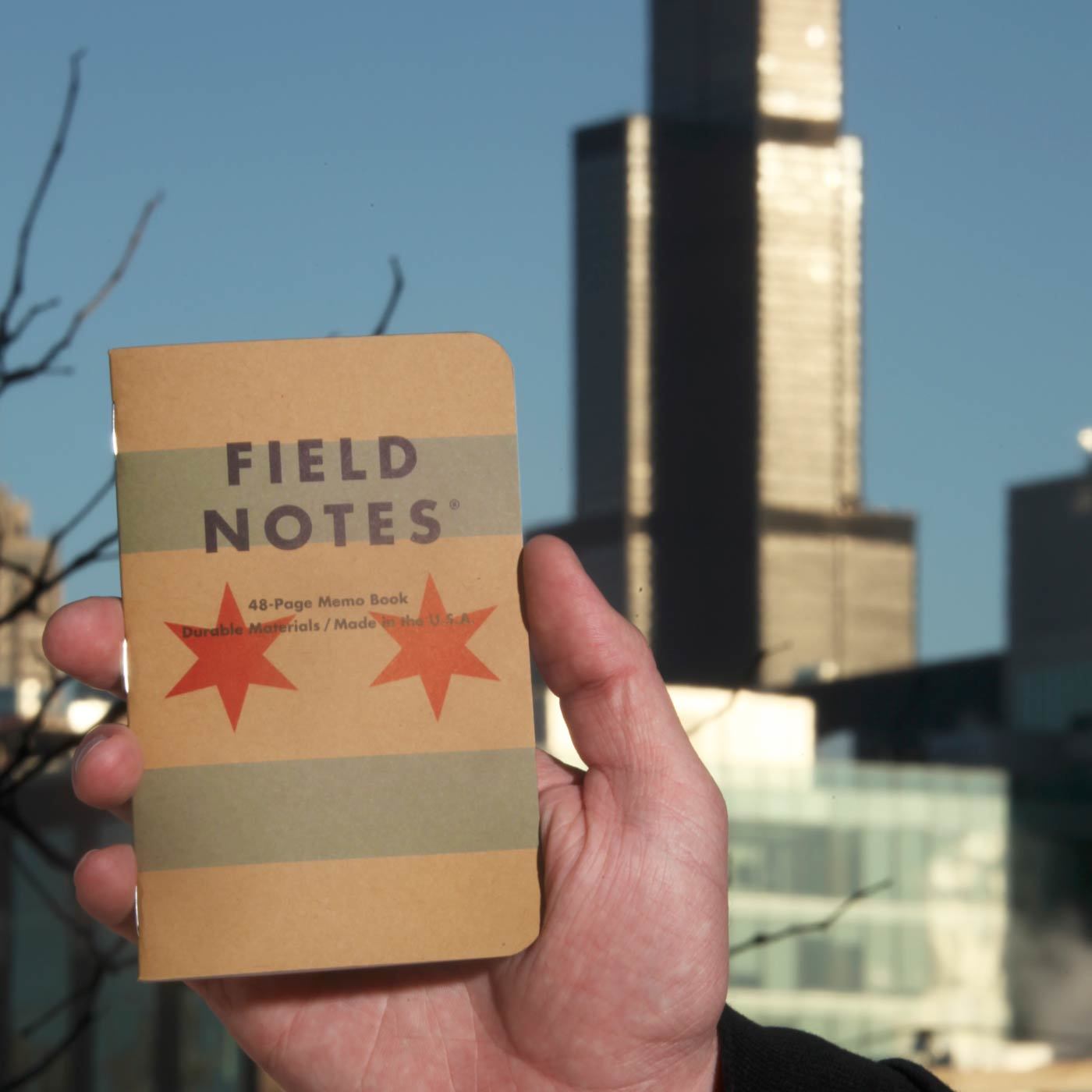
I’ve been using notebooks most of my life. While I’ve jotted down almost all of my writerly drafts — including this post — via Scrivener.app for at least a decade, I use notebooks to err, well, note certain thoughts I have on what I’m watching or playing or reading or hearing.
I usually have two notebooks going at once (specifically Field Notes notebooks as I find Moleskines to feel too precious): one that lives in what we colloquially call the ‘media room’ — most people would name it as a dining room, but it’s where we watch tv/films and play games more often than eat. The other I carry from place to place, so I don’t have to run to my computer to jot a musing down and then get distracted, or it’s used while I’m out reading in the wild.
Additionally, I’m one of those folks for whom physically penning something gives it greater permanence in my mind, as opposed to word-vomiting into a digital word processor. I label the works on the front once I’ve wrapped it up and can transcribe the notes for easier searching. It’s a workflow that I’ve found to be positive for me.
One qualm I have about Holmes’s post?
“I kid you not, white out — AKA liquid paper — which we used to use in the olden days to cover mistakes made in pen. They make it in the form of tape now, so you don’t have to paint it on like nail polish and blow on it.”
I assume this was a bit of convenient underscoring, as I doubt that Holmes was unaware that correction tape predates liquid paper. It was frequently used by those who utilized typewriters, which I certainly did for many years — despite having a computer and WordPerfect as a youth — because it was far more tactile and memorable and put me in a different headspace. (In fact, a friend just gifted me a typewriter recently, which will live side-by-side with my departed grandmother’s typewriter.)
If you haven’t experienced any or all of the LIFE IS STRANGE works, normally I suggest experiencing the LIFE IS STRANGE universe in order of release, despite the fact that they jump backward and forward in time and place:
LIFE IS STRANGE: STEPH’S STORY (narratively predates TRUE COLORS and WAVELENGTHS)
However, I’d suggest reading STEPH’S STORY prior to playing TRUE COLORS, as you won’t have the knowledge as to how Steph’s journey plays out, and it will only enhance your enjoyment of TRUE COLORS and WAVELENGTHS. In addition, it doesn’t require any knowledge of post-LIFE IS STRANGE 2 games, and even better, it does a great job of introducing you to some of facets of the future games.
That said, there really is no wrong way to experience these works!
CONTENT WARNING
This post features mentions of familial death and spoilers for the first LIFE IS STRANGE game, LIFE IS STRANGE: BEFORE THE STORM, LIFE IS STRANGE: TRUE COLORS and LIFE IS STRANGE: TRUE COLORS – WAVELENGTHS.
Franchise tie-in fictional novels have existed for years, probably most iconically via STAR TREK novels. Fans want more of their favorite characters, more experiences within this universe, and they allow writers a latitude that often isn’t an option with visual mediums or their purses.
I’ve played and penned a lot about the LIFE IS STRANGE series this past year, but was stunned to hear that they recently released a tie-in novel, focused on Steph of all people. In retrospect, I shouldn’t have been surprised: there was a LIFE IS STRANGE comic book series several years prior that continues exploring Max and Chloe in Arcadia Bay.
LIFE IS STRANGE: STEPH’S STORY (STEPH’S STORY from here on out) — from young adult author Rosiee Thor (FIRE BECOMES HER and more) — picks up with a post-Arcadia Bay Steph, currently living in Seattle with her father.
One difficult thing about adapting an interactive work, especially one like LIFE IS STRANGE where your decisions have major ramifications, is simply laying the foundation for the text. The closing choice in the first game is that you’re given the option to save your best friend, destroying the town and killing many people, or sacrificing Chloe and allowing the town to limp along.
While Thor could have taken a CHOOSE YOUR ADVENTURE approach, instead the novel explicitly notes in the beginning that the events here take place in a world where Max saves Chloe, razing Arcadia Bay. Thor also underscores that the choices made in this book may not mirror your own if you played the first game, but urges you to keep an open mind.
As I’ve previously noted, there isn’t much Steph in the first game. You know she’s a proud lesbian who loves to run table-top RPG games with her best friend, she sells bootleg DVDs, she’s a tech nerd, and that’s about it. You don’t really even know her home situation, apart from her dad being a video editor.
If you’ve played LIFE IS STRANGE: TRUE COLORS you know that Steph now lives in Haven Springs, Colorado and is still very openly queer. WAVELENGTHS sees Steph navigating her new job as the voice and DJ of Haven Springs radio throughout the timespan of a year, neatly broken up into seasons.
With STEPH’S STORY, you discover that Steph was living with her divorced mother in Arcadia Bay. Her parents had a very dysfunctional relationship and stayed together far too long. Her father moved to Seattle while her mother stayed in Arcadia Bay, effectively dooming herself and dying during Max’s tornado. (LIFE IS STRANGE does love to kill family members.)
Steph gets her college diploma from DigiPen, then after a bout of living with friends, finally moves in with her father.
Steph is still struggling with the loss of her mother when she meets Izzie, who has recently been kicked out of her band. The two become fast friends, then decide to start their own band — DRUGSTORE MAKEUP, with Steph as the drummer and Izzie fronting — and in the process they become romantically entangled. The band starts to pick up steam, matters escalate, and the next stage of Steph’s life begins.
There’s a fundamental facet to Izzie that I feel the need to mention, but also feel it could be construed as a spoiler, so you can see for yourself below:
Spoiler
Izzie is a gay trans woman, and rightfully isn’t as open about this as Steph is about being a lesbian.
[collapse]
Again, if you’ve played TRUE COLORS or WAVELENGTHS, we know ultimately where this ends up: her relationship with Izzie ends, she is no longer in a band but still loves music — although she has mostly moved along from punk — and she’s left Arcadia Bay and Seattle behind. However, as with so many stories, it’s not about the destination but the journey.
And what a journey. Even if this weren’t a LIFE IS STRANGE tie-in, I’d still seek it out. It deftly portrays the highs and lows of a tumultuous relationship and one trying to do so while attempting to struggle with prior traumatic events. The prose is crisp and witty, the characters nuanced, and it is an extremely controlled example of building out a world using pre-existing characters.
That noted: this is a LIFE IS STRANGE tie-in, and Thor exceptionally weaves in all sorts of explicit fan-service in a way that feels respectful and rarely pandering and narratively fulfilling. It also contains a lot of clever wordplay and foreshadowing and tiny riffs on LIFE IS STRANGE dialogue from the past as well as Steph’s future. (There’s a lot of talk about choices and their impact, for example. You also learn the backstory behind Steph’s rainbow PRIDE woodblock, which is not as pedestrian as you might expect. Even the summary on the back mentions “different wavelengths”.)
A few quibbles:
While I know that Thor wants us to roll with her decisions, in this world Chloe and Max are romantically involved which feels like shipping to me, as my Max would experiment, but fundamentally consider herself straight. Max — to me — has always felt like Rory Gilmore — someone who is reserved and while they may occasionally dip their toes into unconventional behavior, often they snap right back to being rather straight-laced.
Secondly, Steph seems like she’s far more involved and invested in Chloe’s life that doesn’t align for me with LIFE IS STRANGE: BEFORE THE STORM and how Chloe connects with Rachel Amber. There’s really no mention of them being as friendly enough before the tornado hits Arcadia Bay and obviously Steph moved right after that.
Lastly, there’s a relatively vivid description of Izzie’s entwined ring necklace, which 100% mirrors the necklace Steph brandishes in TRUE COLORS and WAVELENGTHS. I kept hoping the book would circle back to that, but it never does. So it goes.
I don’t mind these choices — after all, they’re the author’s choices — as they’ll certainly satisfy those who want more Chloe, but their friendship feels shoehorned in, even though they both overtly queer. (Perhaps it’s handled in the graphic novels and, if so, I’ll note that once I inevitably write about those.)
Otherwise, this is a perfect tie-in to the LIFE IS STRANGE universe. It has personality, it’s very gay, it’s character-centric, and it will make you cry tears of joy and sadness. In other words: perfect for any LIFE IS STRANGE fan, or any fan of a young, queer, punk human drama.
There’s no lyric video equivalent for the novel, so enjoy this ECCC panel interview instead, where Thor describes the process and nailing the pitch! Great info for future writers!
![FOETUS – [CIRR]](https://mediaclature.com/wp-content/uploads/2023/04/foetus-boil.jpg)
![FOETUS – [SSYP]](https://mediaclature.com/wp-content/uploads/2023/05/foetus-sisyphus.jpg)
![FOETUS – [VIVA]](https://mediaclature.com/wp-content/uploads/2023/05/foetus-nail.jpg)
![FOETUS – [POOL]](https://mediaclature.com/wp-content/uploads/2023/04/wiseblood-cover.jpg)
![FOETUS – [PLND]](https://mediaclature.com/wp-content/uploads/2023/05/foetus-hole.jpg)
![FOETUS – [CHRT]](https://mediaclature.com/wp-content/uploads/2023/05/foetus-inc.jpg)
![FOTEUS – [INTR]](https://mediaclature.com/wp-content/uploads/2023/04/foetus-intr.jpeg)