Susan Orlean’s THE ORCHID THIEF is a real-life character profile of one John Laroche, a plant dealer working for a Florida Seminole plant nursery. Laroche has a plan — a heist, really, even though it’s sanctioned by his Seminole nursery boss — to lead a few Seminole co-workers into Florida’s Fakahatchee Strand, land that Seminoles have the legal right to take wild flowers from, and leave with several ghost orchids which Laroche will then clone and he and the Seminoles will profit from. Laroche sees it as a win-win.
Unfortunately, he and the workers are caught, and then the legal rights of the Seminoles are called into question.
While it sounds more like a legal thriller, the case simply simmers in the background for the bulk of the book. Instead, it’s really Susan Orlean trying to understand the personal and zealous obsession of orchid collectors, as well as scrutinizing the growers and dealers who live as aberrant fringe elements in an inhospitable environment (mirroring the deviancy and adaptation of orchids themselves), while also spotlighting the tenacity of the Seminoles to live on their own terms.
Over the better part of a year, Orlean travels to orchid shows, swamps, nurseries, and encounters some savvy strange folk, some natural inventors and businessmen, others are oddities that eke out an existence. The line connecting all of her subjects? They all want more flowers, and they want more -interesting- and -different- flowers. It’s never enough, despite the fact that the flowers often die due to undesirable conditions or lack of knowledge as to how to sustain them. It’s not enough to see the orchids in their natural habitat — it’s a need for possession and ownership.
Orlean’s claim in this investigation is that she’s trying to understand this obsession, but I think she does. She’s there to collect stories, collect enough to make an enticing piece — not unlike some of the orchid events. It’s what she’s done as a journalist for THE NEW YORKER her entire life. She puts herself in severely unsafe situations for the sake of her collecting, not unlike Laroche.
It’s a fantastically woven and admirable work; a once-in-a-lifetime confluence of events and personas that embody themes both small and large, personal and political, beautiful and ugly.
(Paramount+/VOD) Apologies in advance for the massive preamble here, and the general length of the piece! I actually did whittle it down, but still …it’s STAR TREK.
Both my wife and I have been huge STAR TREK nerds since we were young. I watched the original series while it was in syndication before my family had cable, read all of the novelizations and extended universe books that my school and local library stocked, subscribed to The Official Star Trek: The Next Generation magazine, and even cried when my hairdresser botched my Spock haircut. (She was probably just looking out for my best interests, so thanks?)
At some point, I simply lost interest. I watched a few eps of every post-TNG series over the years, fell asleep during FIRST CONTACT (or was it NEMESIS?), but ultimately I was hard-pressed to care.
During lockdown, my wife and I figured it was as good a time as any to dive back in. We’ve been happily working our way through DEEP SPACE NINE together, and she started binging DISCOVERY on her own. Every time I’d walk through the room while she was watching, I’d witness some humanoids in a lift, talking at each other via overly-complicated and unnecessary camerawork. I was not impressed.
She indulged my optimism for PICARD, based on my prior love of TNG and the fact that the show runner was Pulitzer Prize winner Michael Chabon (THE ADVENTURES OF KAVALIER & CLAY). In the interest of brevity, I’ll simply state that was a mistake.
Once we hit the end of DS9’s third season, she implored me to watch DISCOVERY’s third season — which she had already seen — noting that I could get up to speed pretty quickly, and she wasn’t wrong. The opening recap lays out most of what you need to know: DISCOVERY takes place around the time of Captain Pike’s heyday, a bit before the original series. Michael Burnham (played by Sonequa Martin-Green) is an orphaned Black human woman — Michael’s name is a signifier that DISCOVERY started as a Bryan Fuller show, showcasing his love for masculine-named women * — who was adopted by Spock’s family, grew up on Vulcan, and has become a swashbuckling heroic-but-flawed Federation member serving on the USS Discovery.
The USS Discovery is a Federation starship with an experimental ‘spore drive’ which allows them to speedily navigate space without the need for dilithium crystals, however, someone has to be able to interface with them for …reasons. Thankfully, USS Discovery has brilliant-but-prickly Paul Stamets (Anthony Rapp) to physically interface with the drive. Stamets’ husband is Hugh Culber (MY SO-CALLED LIFE’s Wilson Cruz) who is USS Discovery’s Lieutenant Commander. Rounding out the ensemble is: Philippa Georgiou (a charismatically chilly Michelle Yeoh) who is there for …reasons, and she is complex, captivating, and knows how to verbally eviscerate anyone; Saru (an unsurprisingly heavily made-up Doug Jones) as a measured, by-the-book officer and newly-introduced species called the Kelpien; Ensign Tilly (Mary Wiseman) as the overly chatty, but intelligent and warm-hearted foil to Stamets, and Lieutenant Keyla Detmer (Emily Coutts) who serves as a steadfast helmsman.
Oh, and they have Tig Notoro and David Cronenberg as occasional cast members! Granted, both are rather under-utilized, but it’s always thrilling when they show up.
I won’t touch on any particulars of the third season’s plot, as doing so would certainly spoil matters for the first two seasons. Again, I haven’t seen the first two seasons, but based on the critical and fan reactions I’ve heard, the third season course-corrects quite a bit. I found it to be a very enjoyable, very satisfying self-contained season of STAR TREK, although I was initially hesitant as the opening eps primarily focus on Michael’s journey — STAR TREK has always excelled at ensemble work — and I had a number of quibbles with some of the retrofitting and a lot of the details concerning the ship interfaces, but they explained enough of it that made me happy. (This seems to be an unpopular opinion.)
Unlike PICARD, there were a number of times where I exclaimed: “This is my kind of STAR TREK!” as there were more than a few eps that focused on discovering new worlds with kind intent, recreating the wonder that drew me into the STAR TREK universe in the first place. While not all of the characters are terribly complex, their motives and Federation-centric willfulness to be as helpful as they can be was refreshing, comforting, and familiar. It felt like the show realized what it needed to do to recapture the original series’ magic, all while gamely moving matters forward.
When I stated that the season feels self-contained, I meant it. This season starts with a breaking point and ends with a two-parter that comes across like a spectacle-laden STAR TREK film (albeit an even-numbered one) with -huge- stakes and an extremely memorable and intriguing villain in Orion Minister Osyraa (an exceptional Janet Kidder) and, when the last episode fades to black, it feels like a chapter has ended; it feels like a series finale. A fourth season has been confirmed, and it appears that it’ll be a season that isn’t so Kurtzman-fueled but, instead, a STAR TREK show more like the ones I watched with awe as a youth: a show based on optimism, empathy, wonder for the unknown and, well, discovery.
I’ve included a STAR TREK: DISCOVERY S3 trailer below. Do not watch if you have plans to watch S1 or S2:
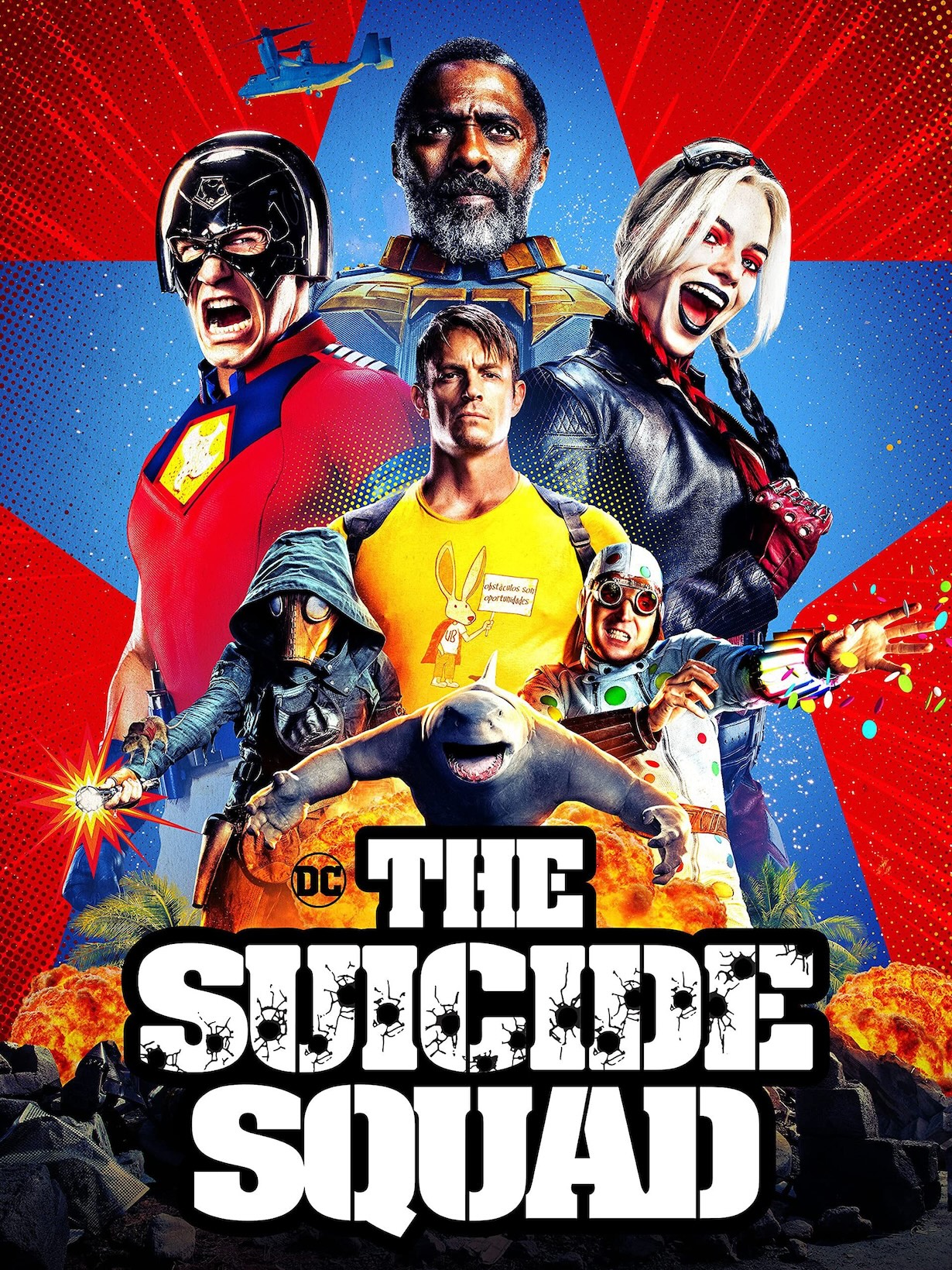
Okay, yup, THE SUICIDE SQUAD is pretty good. My second favorite DCU film, behind BIRDS OF PREY, but I’ve seen very few contemporary DCU films.
It’s damn stylish, it embraces the unique weirdness of the quirkier DC comics — I never thought Starro would be a featured creature in a big-budget DCU film. (On a CW show? Perhaps.) — and it features a lot of great character work and moments! There’s also a fantastic physicality to the film — not just with the stunts, but the squad members all have visible wounds: cuts, lacerations, abrasions, which you simply don’t see in bloodless MCU films.
However, it’s overly long and drags at times — it took me three days to watch it, although part of that was attempting to watch it while working, which was a mistake — and it takes a while to go fully bonkers. Also, very bad decisions were made regarding their subtitles. I don’t know what they were thinking when they chose that font.
Still, it’s a gory, ultra-violent fun time with a dazzlingly perfect cast. I’m ecstatic that Juan Diego Botto had a plum role, as he is criminally unappreciated. (If you haven’t seen GOOD BEHAVIOR, I suggest that you rectify that)
Lastly, I’m happy to see that ear cuffs are apparently back in style again. (You can’t believe how much I’ve hoped they’d make a comeback while watching STAR TREK: DEEP SPACE NINE this summer.)
I have not been shy about boosting Megan Abbott over the years; QUEENPIN — her third novel — was a foundational text for me. Upon initially reading it, I asked myself the same question that I’ve asked myself upon consuming other transformative works: “You can get away with this?”
QUEENPIN is a lurid and lusty piece of neo-noir about a smart but young woman who falls in doing accounting work for questionable people, and matters quickly escalate into a very combative piece about two willful women butting heads and committing increasingly terrible acts.
That’s Abbott’s oeuvre in a nutshell. She’s all about the power dynamics of female relationships, appetites, and those who take advantage of the those facets. Perfect material for neo-noir but — as Abbott quickly sussed out — also well-suited for young adult novels, of which she penned a handful of (including the cheerleading YA-noir DARE ME, which she adapted into a canceled too soon USA TV show).
THE TURNOUT is the first book of hers in some time to feature an adult protagonist and players. Granted, it still focuses on extraordinarily physical youth-centric endeavors — this time ballet — and has a number of teen flashbacks, but the endgame here is all about the adults and living with the wreckage of their youth.
It’s a tale of two sisters — Dara, a flinty ice queen, and Marie, mercurial and immature — who run their dead mother’s ballet studio. For years, Dara and Marie and Dara’s husband Charlie, also an ex-dancer who grew up alongside them, lived under their dead parents’ roof. Marie decides to move out, opting to live in the attic of the studio, which used to be their mother’s private space.
A fire breaks out in the studio and they enlist Derek — a smooth-talking contractor — to repair the space while they prepare for their annual NUTCRACKER slate of performances, and matters spiral from there.
Abbott’s prose and internal monologues have traditionally been her strengths, but THE TURNOUT has a lot of repetitive dialogue between characters, a number of redundant explanations, and the plotting also feels a little too neat, a little too exacting.
However, this is still an Abbott book, and those are nitpicks. It is vividly enthralling, with rich and complex characters about an under-examined artistic and physical medium, there’s more than a bit of du Maurier regarding how Abbott treats the dilapidated house and studio, and she definitely sticks the landing. It’s well-worth your time if you’re into off-beat thrillers and personas.
GIRLS5EVA, from the gut-busting mind of Meredith Scardino, is one of the few shows I had to relegate to only watching during the daytime, and while I wasn’t working, because it’s so fucking hilarious that it was distracting and my laughter was prone to waking folks up. This tale, of a girl pop group making a resurgence 20 years later, is a gag-a-minute, and every performance is pitch-perfect. It’s well-worth the peacock subscription solely for it. Don’t believe me? Here, enjoy this array of jokes:
“So, I dug up our old agreement with Larry and I think he used an old Ringling Bros. contract. Not even for humans; for bears!”
“Well, I’ve always admired that work ethic in the bedroom — it’s bananas — but otherwise it’s too much!”
“Assembly requires four men or nine daughters.”
“Wait, did you make the MAXIM HOT list?”
“Oh, yeah. Oh my god, we got this swag bag from the women’s empowerment luncheon at the Victoria’s Secret Trampoline Park.
“Oh, a temporary tramp stamp. ‘October Sky’, now on VHS.”
“YOU HUMAN B-SIDE!”
“Why am I never the one profiting off of me?”
“You’re all in my will. I have a parrot I haven’t told you about that won’t die.”
(I admit that that bit? Hits a little too close to home for me as I literally have a parrot willed to me because I have lived a strange life.)
“Guess it’s just you and me, Ash.”
“Honestly, too many people left for this to be fun. Now that it’s just the two of us, it’s feeling kind of weird.”
Oh, I loved this. I wrung every bit of web-slinging joy from Insomniac’s prior Spider-Man game, but never quite loved the story, given that Peter Parker was basically re-enforcing a New York City police state.
SPIDER-MAN: MILES MORALES takes everything that’s great about Insomniac’s prior SPIDER-MAN game and improves on almost every facet of it. The mechanics are just as silky-smooth, if not better, than the prior game. However, what really makes the game shine is the writing which, for a triple A blockbuster superhero game is a minor miracle.
(I’ll quickly note that I’m not at all familiar with Miles Morales apart from INTO THE SPIDER-VERSE. I’ve read zero of the Marvel Ultimate comics.)
Miles (now a younger Spider-Man) and his childhood friend Phin are teenage nerds. Not contemporary nerds, but old-school smart nerds who get excited about science and space and tinker on projects together! They’re still struggling with finding their space in the world — as teens do — but they’re not too terribly awkward, and they have a very tight brother/sister dynamic. But really, these two are unapologetic brilliant nerds, it’s the springboard for the game’s arc, and I love it.
There’s also an earnestness and idealism that I adore about the game. Yeah, there’s a lot of overwrought conflict that wouldn’t feel out-of-place in a J.J. Abrams work, you have to suspend disbelief for the sheer amount of tech created within such a short period of time, and I’m a bit shocked at how some of Miles’ moves would -definitely- induce death — for example: you can turn human bodies into bombs — but overall it’s an extremely playable game about biological and adopted family and the love for your original and adopted boroughs.
Did I mention that the game is goddamn gorgeous?! Insomniac also lets you tweak what you prefer from your visuals. Want high-end visual fidelity? You’ve got it, locked at 30fps! You demand 60fps? You can have it with a few downgrades you’ll never notice! Want it to look like INTO THE SPIDER-VERSE? No problem, just make sure to bank some activity tokens first.
If there’s one flaw, it’s that Miles’ powers seem far too powerful, and the game occasionally tries to course-correct this with power-negating guns and/or throwing waves and waves of criminals at you, invoking occasional frustration, but that doesn’t last long. Eventually you’ll suss the proper rhythm.
This is blockbuster gaming done right and I hope other studios learn from it, and I’m very happy that I waited for a PS5 to play it. In fact, I’m still playing it, because I love the bodega cat costume so much, which is only available after starting New Game+.
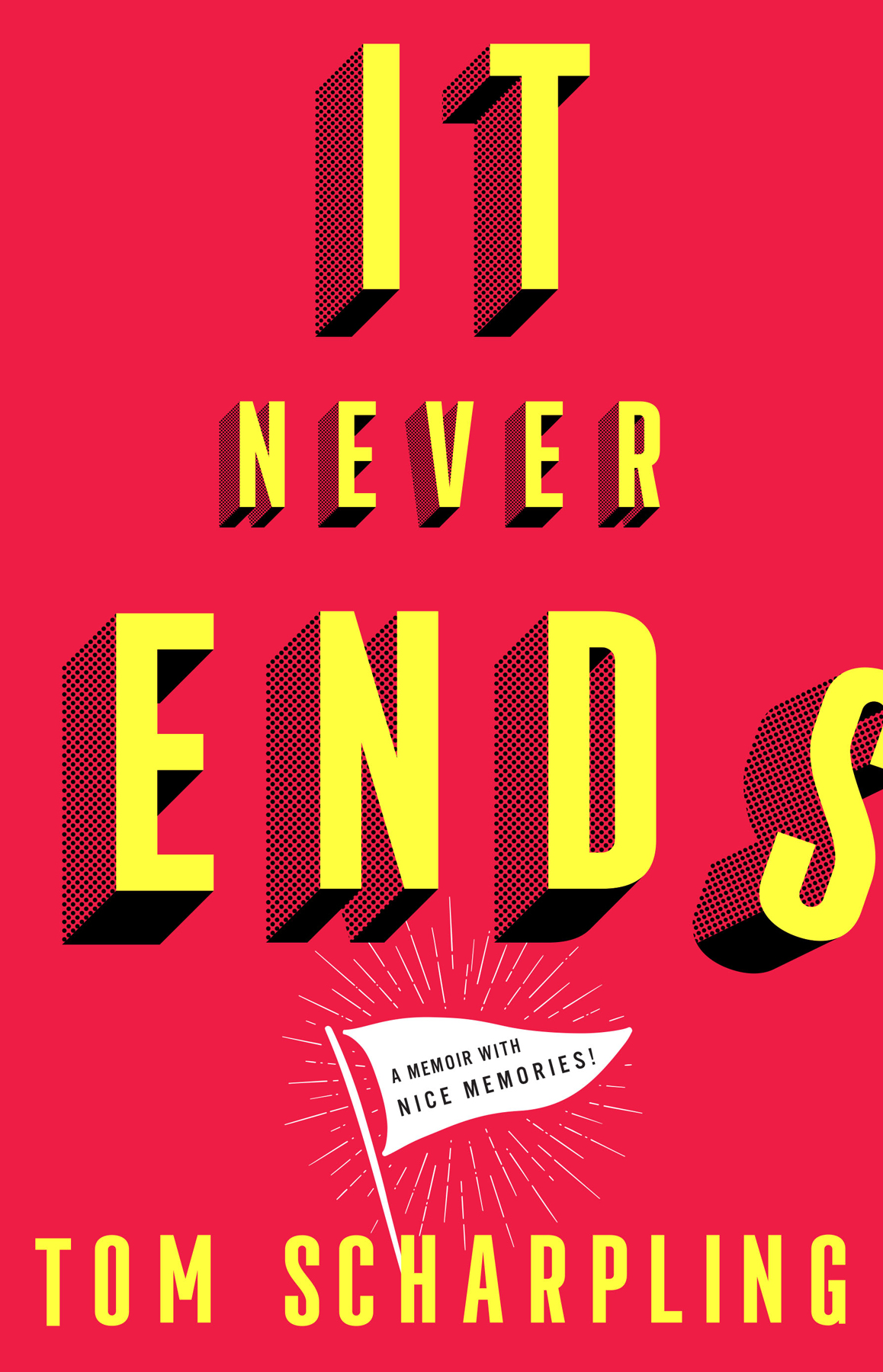
I’ve been following Tom Scharpling for a while: he was involved with every episode of MONK, my first adult TV mystery love (yet again, I stupidly worked my way backward and wouldn’t see COLUMBO until a number of years after MONK’s finale); I’ve tuned into THE BEST SHOW intermittently over its long life; I’ve laughed along with his banter with Marc Maron on WTF, heard him as Steven’s father on STEVEN UNIVERSE, and I now eagerly look forward to every Monday drop of DOUBLE THREAT, his weekly podcast with Julie Klausner.
If there’s any thorough-line with Scharpling’s work and comedy, it’s that he’s earnest and never malicious. He doesn’t punch down. He’s a nakedly honest funnyman who wears his heart on his sleeve, someone who is unafraid to admit to times when he’s openly wept.
Unsurprisingly, his memoir IT NEVER ENDS, is similarly earnest, honest, and emotional, while often laugh-out-loud funny. While Scharpling has had his ups and downs, and he has battled a number of personal issues, he’s always straightforward with the reader, and he is well-aware that he hasn’t suffered some of the many hardships as many others have. However, he also realizes that his personal journey hasn’t been easy for him, and he conveys his insecurities and depressive attributes in ways that are extremely relatable, and he hopes that the reader can learn from his experiences.
It’s a quality memoir, one that excels when it’s recounting stories rather than describing them. While it’s as amusing as you’d expect from Scharpling, it’s far more interesting and deeper than you’d suspect, and worth your time.
I loved Emma Cline’s debut novel THE GIRLS, about a flailing fourteen-year-old girl who falls into a Manson-esque cult chock full of flawed members. Although I normally eschew short story collections and opt instead to reach for a novel, I didn’t want to miss out on more material from her.
DADDY is about similarly flawed folks — selfish, myopic, self-destructive, and/or hedonistic people — but they’re all intriguing examinations of individuals dealing with families, both biological and otherwise. Cline certainly has a number of themes and go-tos for her imagery, but they don’t feel overly redundant, and her prose is crisp, clean, but never clinical. If you’re looking for a number of tales about likable individuals learning life lessons and rightening their path, look elsewhere. Also, if you’re looking for shorts that end with a sense of closure, you should steer clear. If you pursue it, you’ll find a satisfying ensemble of fractured humanity.
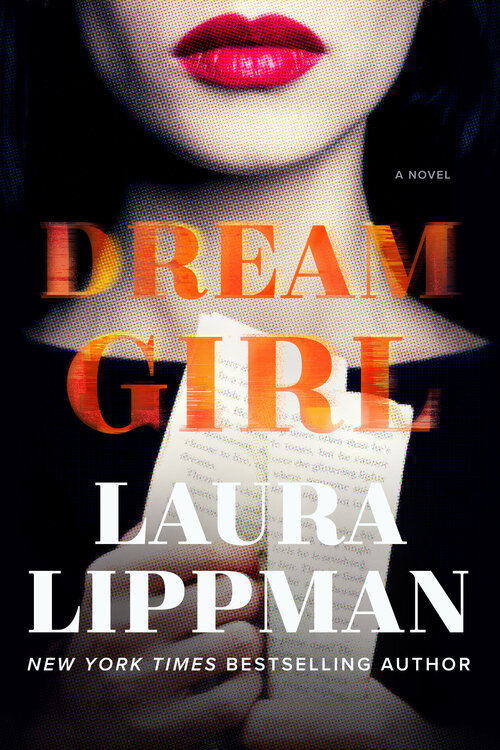
Reading Laura Lippman’s DREAM GIRL after NIGHTSHADE was a real treat. Both novels are about two successful creatives who believe they’ve lived their lives in justifiable ways, but are often lying to themselves.
Whereas NIGHTSHADE was a suspenseful character drama about an acclaimed artist, DREAM GIRL is a psychological thriller about an acclaimed writer. Gerry Anderson is a successful novelist whose breadwinning accomplishment was that wrote an evocative LOLITA-esque story which, despite pre-dating 9/11, also managed to convey the cultural feelings of a post-9/11 world. It was enormously successful, but he’s constantly hounded about exactly who the titular ‘Dream Girl’, Aubrey, is based on. Gerry consistently replies that she is a complete work of fiction, not based on anyone.
Gerry’s moved from New York City to Baltimore to be with his dying mother but, a few days after he closes on a high-rise apartment, she dies. He takes a tumble down his newly acquired floating staircase which leaves him bedridden and at the mercy of his new assistant Victoria, and his night nurse Aileen. Shortly after, he starts receiving phone calls from someone claiming to be Aubrey, and he starts to wonder if he’s losing touch with reality.
Lippman’s probably best known for her Tess Monaghan detective fiction series, about an ex-Baltimore newspaper journalist turned private detective, but she’s become increasingly known for her one-off novels, such as WHAT THE DEAD KNOW and LADY IN THE LAKE, which are far darker and more self-indulgent. DREAM GIRL definitely fits that mold, as it’s peppered with all sorts of references to old-school noirs and detective fiction, novels like THE DAUGHTER OF TIME, references to her friend and author Megan Abbott (who penned my favorite neo-noir novel QUEENPIN), so many riffs on classic Hollywood and horror films, and even a quick moment with Tess Monaghan herself. In other words, it was tailor-made for me, but there’s also a lot to appreciate about the novel from a structural standpoint. Lippman’s exceptional at setting everything up so that, right before the reveals come, the curtains fall from your eyes, and you can’t help but appreciate the breadcrumbs she’s strewn through the prior pages.
It’s a gripping work, slightly bogged down by the fact that, if you know the works she namedrops, she telegraphs how this will play out. That said, the book has a few more surprises once you get to that point, so you can forgive her for that, and Gerry is an intriguing enough character study to set aside the suspense story itself.
I initially picked up Annalena McAfee’s NIGHTSHADE because of the cover, but the front-cover puff quote from THE OBSERVER really grabbed me: “A glorious novel. … Full of twisted sexuality, art and power. … Brutal and unforgettable.” It’s a rather generic remark, yes, but I bought it because I wanted a ticket for that ride.
It did not disappoint, and the puff quote is entirely accurate. I’ll note in advance that, due to how the book is paced, this is a very difficult novel to summarize and I’d hate to give anything away.
Protagonist Eve Laing is a prickly, spiteful painter in her sixties who has had some success with her realistic portrayals of flowers in her works, notably in substituting flowers for the London Underground tube map. She’s brainstormed a new work, one focused on poisonous flowers, which is meant to be her magnum opus.
At first, NIGHTSHADE feels in the vein of Margaret Atwood’s CAT’S EYE (a personal favorite) in that it’s an older creative substantially reflecting on their artistic and personal life while navigating a city.
Then it takes a turn. Then another. And another.
It takes a while to unfurl but, if you have the patience for it, you will be rewarded.