TALES OF THE CITY (1978-)

Armistead Maupin’s series TALES OF THE CITY — which started off as a series of reads in the -San Francisco Chronicle- — is an array of a queer found family to be jealous of. The first collection, aptly named TALES OF THE CITY, follows the antics of naive, very straight 25-year-old midwesterner Mary Ann as she moves to San Francisco.

Mary Ann takes up residence at 28 Barbary Lane, a quaint apartment building overseen by kindly weed-aficionado Anna Madrigal. Living under Ms. Madrigal’s roof is Michael “Mouse” Tolliver, a gay man with commitment issues, free spirit Mona Ramsey, and others who help to weave Mary Ann into the fabric of San Francisco.

As you might have surmised from the title and significant cast of characters, TALES OF THE CITY is extremely Dickensian, even down to adopting some of Dickens’ predilection for the outrageous. Maupin doesn’t go as far as incorporating spontaneous human combustion into the works, but the residents of 28 Barbary Lane often do find themselves in outlandish melodramas fit for a soap opera. (It’s telling that the extreme primetime TV soap MARY HARTMAN, MARY HARTMAN is mentioned in the first fifteen pages.)

Yes, the sensational and lurid elements of TALES OF THE CITY are effectively titillating and propulsive, it’s the sense of time, place, and relationships that hooked me: Mary Ann grows more and more comfortable with counter-culture — queer or otherwise —; Mouse’s mood shifts as he longs for a substantial and fulfilling relationship, but instead fills his days with club nights and numerous hook-ups; Ms. Madrigal’s back-story and how she juggles it as well as the needs of all around her. They’re all heartfelt tales, all deeply rooted in San Francisco at the times Maupin was penning the installments for the paper: mid-70s for TALES OF THE CITY, late 70s for MORE TALES OF THE CITY, and early 80s for FURTHER TALES OF THE CITY.

As the TALES OF THE CITY books are being published to this day — although only the first five were previously published in weekly newspaper installments — it remains a fascinating document of cultural shifts, generational schisms, mores, moods, urban changes, and perceptions of societal, sexual, and gender norms. Not to mention reading about the San Francisco imagines it to be — artsy, extremely left, very weird — instead of the dudetechbro nightmare it’s become.

An aside: I’ve only read TALES OF THE CITY, MORE TALES OF THE CITY and FURTHER TALES OF THE CITY. It’s one of those series that I’m trying to slowly dole out, as its emphasis on ever-shifting culture. However, you can certainly feel the specter of AIDS looming over FURTHER TALES, ensuring that I need to emotionally gird myself for BABYCAKES, the fourth volume.

The series was wildly popular for years, was turned into a TV adaptation in the 90s which was resurrected by Netflix for a mini-series, and is one of BBC’s Top 100 Most Inspiring Novels.

However, like how MARY HARTMAN, MARY HARTMAN burned so bright in the mid 70s and is almost entirely forgotten today, it wasn’t until recently that I discovered the series. I’m certain that’s partially because some the situations and perspective and language is dated, but that’s a feature — not a bug. As we as society are rather cyclical, it’d be wise to not let the series collect cultural dust.

Lastly? Now more than ever, we need to hear liberating and enlightening and life-saving finding your own family can be, that you can find safety and security and form lifelong bonds with others.

28 Barbary Lane is fictional, but 28 Barbary Lanes exist all over. I’m currently living in my own 28 Barbary Lane, in a queer and weird slice of Chicago that I wouldn’t trade for the world. If you still haven’t found your 28 Barbary Lane, well, let Armistead Maupin pen you a map.

Electroclature Volume Thirty: XXX

Not to gladhand myself — well, maybe a bit — I am a huge fan of this cover. I can’t recall where I took the picture and while I definitely sweetened it, I love the composition. I love the background pattern, and I love how the leaf at the bottom invisibly connects with the river. I love the overlaid spatter on XXX. I even somewhat like the font size!

Enough about scenery! Bring on the musical highlights!

EMA! Indie-electro at its finest! ‘The Grey Ship’ is exceptionally languid, but additional tracks escalate and feel like dirt pressed over a forlorn voice.

Unsurprisingly? Saw ’em at Chicago’s EMPTY BOTTLE for what was an incredibly emotive experience. Sadly, I doubt we’ll receive any new EMA material, but at least we have what we have.

THEE 50’S HIGH TEENS! Throwback early 60s garage rock, synths and all, helmed by righteously angry women whose temperament you can feel through this instrumental track.

WILD FLAG! I normally are not one for supergroups, but goddamn, this is one I could not resist, and the end result? Perfection. SLEATER-KINNEY’s Carrie Brownstein and Janet Weiss! HELIUM’s Mary Timony! THE MINDER’s Mary Timony!

‘Romance’ is absolutely succinct perfection. No flaws. It’s a raucous-but-tight production that builds perfectly from the opening synths to the Mototown infusion! Also, the chorus is so goddamn hooky and makes me grin every time I hear it.

(Yes, I also saw ’em at EMPTY BOTTLE and no one can take that stellar memory away from me.)

Back to set the scene! (Artist / Album / Song — links go to a video of the song, if available):

  1. SOAP&SKIN / Lovetune For Vacuum / DDMMYYYY
  2. BLAWAN / Bohla / Lavender (No official video, so enjoy this fan-made one that features John Travolta shoehorned into two scenes he shouldn’t be in.)
  3. YOUNG CIRCLES / Jungle Habits / 2012 (Audio only)
  4. NICO VEGA / Fury on Furt / Beast
  5. KATZENJAMMER / A Kiss Before You Go / Gypsy Flee
  6. THE GOOD THE BAD / From 018 To 033 / 028
  7. WILD FLAG / Wild Flag / Romance (Video directed by Tom Scharpling!)
  8. X-RAY SPEX / Germ Free Adolescents / Identity
  9. P.J. HARVEY / Let England Shake / The Words That Maketh Murder
  10. EMMY THE GREAT / Virtue / A Woman, A Woman, A Century Of Sleep
  11. EMA / Past Life Martyred Saints / The Grey Ship
  12. LYKKE LI / Wounded Rhymes / Sadness Is A Blessing
  13. THE PINEY GIR COUNTRY ROADSHOW / Jesus Wept / The Sheriff Of San Miguel
  14. EILEN JEWELL / Queen of the Minor Key / Queen of the Minor Key
  15. MAD JUANA / Kumpania / On The Side Of The Wild (Sadly unavailable to stream for some reason)
  16. THEE 50’S HIGH TEENS / Punch De Beat / Stoller In the Air
  17. CULTS / Cults / Abducted
  18. PEGGY SUE / Acrobats / Song & Dance
  19. TARANTELLA / Esqueletos / Dark Horse

THE 7 1/2 DEATHS OF EVELYN HARDCASTLE (2018)

I seek out works for the motives, the fallout, the folks on the periphery and the secrets they keep; I want a story about human nature that scrutinizes what makes people tick. I don’t want a puzzle box piece, one that neglects humanity and emotion in favor of intricately mapped out timelines of character placement and machinations.

On paper, intricately mapped out timelines of character placement and machinations is -exactly- what Stuart Turton’s novel THE 7 1/2 DEATHS OF EVELYN HARDCASTLE comprises. The novel’s protagonist, Aiden Bisop, has eight days and eight bodily hosts to solve the murder of Evelyn Hardcastle on the day of her birthday party. Each day sees Aiden inhabit a new body on the same party day. Each day he has to scrawl out the timing and positioning of everyone so he can maximize what he witness, and what information he can wring from someone.

Yes, on paper it sounds like a big ol’ puzzle box of a text.

In execution? Well, it’s still a big ol’ puzzle box of a text, but the puzzle is just a framework to examine human nature and drives, the ability to adapt and change, and questions who and what influences others.

It also dives into which minor remarks can snowball and change one’s perspective. Keeping with that theme, I will refrain from detailing any more about 7 1/2 DEATHS than what is mentioned above and simply state that it is more than it may seem.

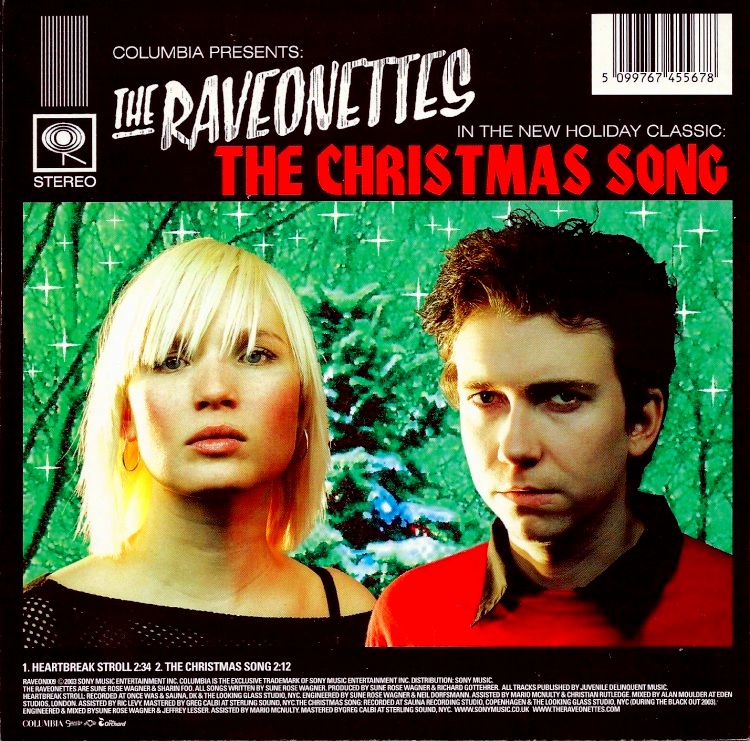
THE RAVEONETTES – The Christmas Song (2011)

Looking for a song to listen to while nestled in a cozy sweater, dreamily staring out a frosty window? THE RAVEONETTES are here to keep you company with The Christmas Song!

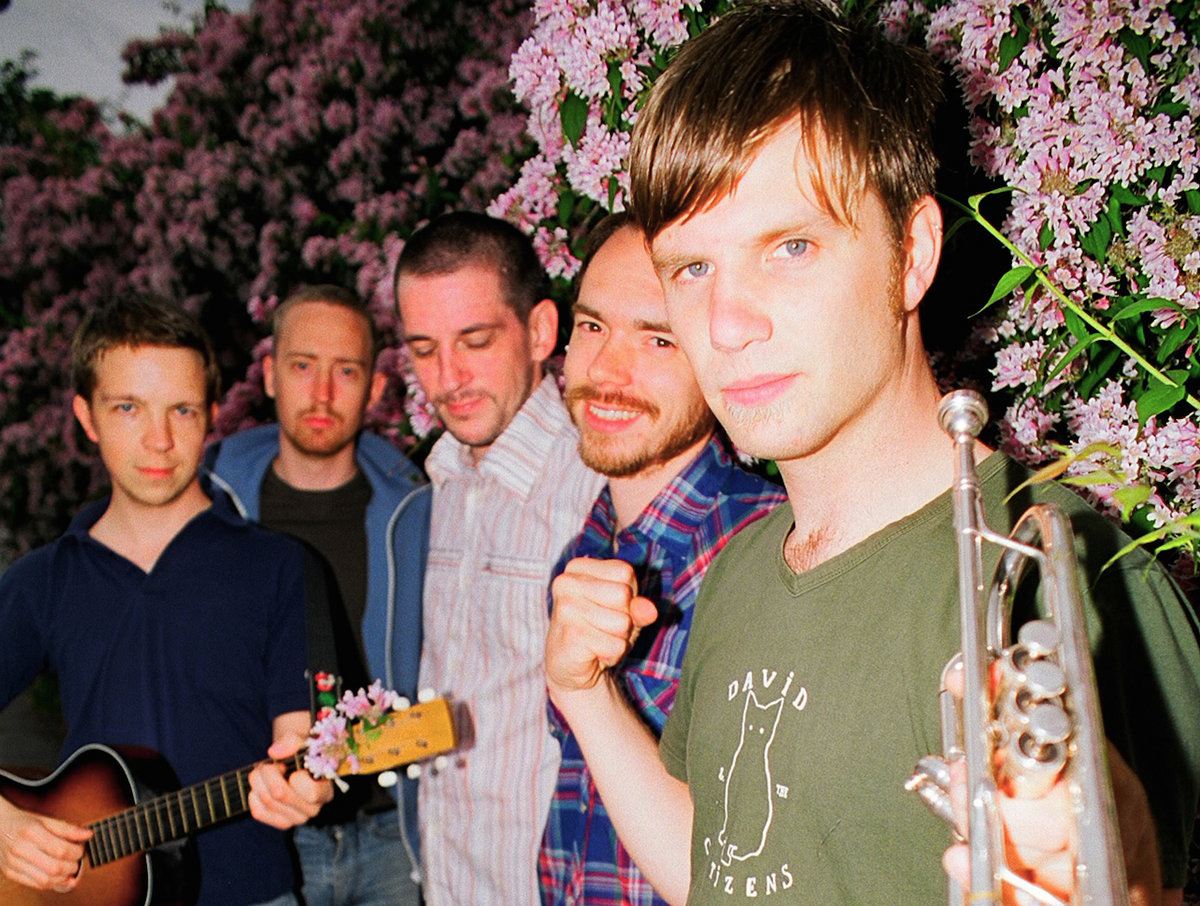
DAVID & THE CITIZENS – Christmas Eve (2004)

DAVID & THE CITIZENS is a Swedish group that’s been around since the late 90s, formed by David Fridlund. They’re quite good at crafting soulful, resonant and often devastating songs, including the previously featured Now She Sleeps in a Box in the Good Soil in Denmark.

Are you looking for a sunny & bright paean to the night before Christmas? You may want to look elsewhere. However, if you’re having a lousy holiday season and want to go on a rollercoaster ride of emotions, well, look no further!

THE LONG BLONDES – Christmas is Cancelled (2004) [REDUX]

A bit late in the month, but to get in the spirit of the holidays I’ll be posting and reposting a few classic seasonal songs. For example, this under-appreciated repost of a “holiday missive from an underrated early naughts UK pop ensemble.”

I’ve played this every year since I discovered it in 2007, much to the dismay of anyone who has road-tripped with me in December.

THE STRANGE CASE OF HARLEEN AND HARLEY (2024)

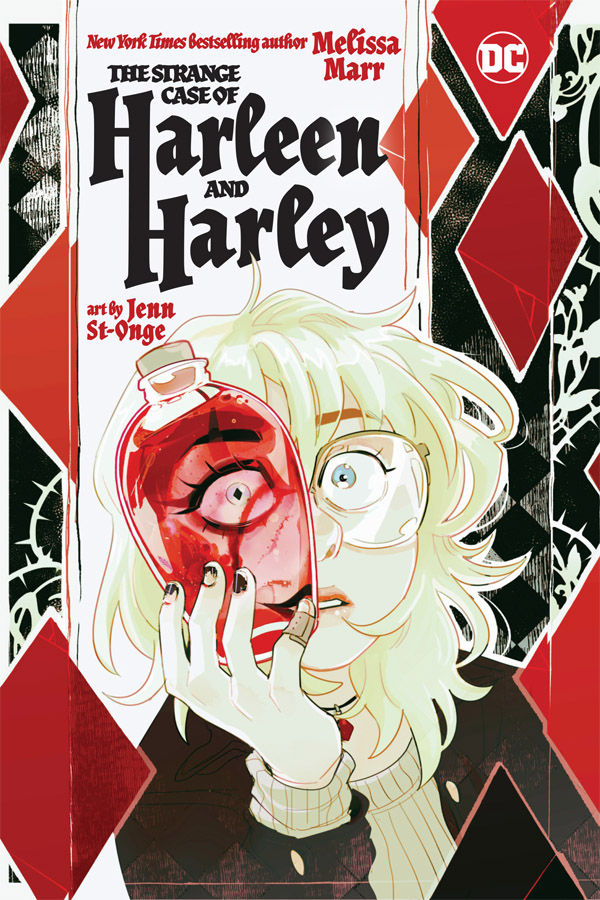
As alluded to by the title and the cover, THE STRANGE CASE OF HARLEEN AND HARLEY from writer Melissa Marr (WICKED LOVELY) and Jenn St-Onge (JEM & THE MISFITS) tackles Robert Lewis Stevenson’s DR. JEKYLL AND MR. HYDE via an alternate young adult take on one Harleen Quinzel.

Harleen and her family — her mother, her criminal associate dad, and her younger sister and older brother Miri and Joey — are exiled from Gotham to the suburbs.

During a brief break-up with one Pamela Isley, Harleen became entangled with a dude named Bernie who straight-up murders a schoolmate for making fun of Harleen. Bernie is jailed, and Harleen and family pay the price by association in more ways than one.

Sidelined, her father is having a hard time paying the bills. Due to court-appointed probation, Harleen drive. Without car access, she can’t get a job. No job means no money to pay her gym coach.

No gym coach, no training.

No training, no college scholarship.

Reunited and joyriding with Pam, Harleen spots a billboard for Hawthorne Biomedical Laboratory, who pay volunteers for medical experiments. Even better? One of the experiments studies the effects of a new anti-anxiety medication, giving Harleen hope for a respite from her crippling anxiety.

The meds relieve her anxiety far too well. After each dose she becomes the far more gregarious, hedonistic, risk-taking, and fast-talking Harley Quinn. Pam immediately notices, impressed, stating: “You seem different. […] You don’t feel like ‘Harleen’ tonight.”

Matters escalate, including Harley freeing lab animals from Hawthorne with Pam, who Harley names “Ivy” because “I like how your arms feel wrapped around me.” Harley riles up a prison riot. Harley discovers that, thanks to the experimental drugs, Pamela blooms into Poison Ivy. (Couldn’t resist.) Also? Harley starts running criminal errands for one Jack Napier.

(If you know that name, you know and, no, you do not have to worry. If that name is new to you? You also don’t have to worry about it!)

In adapting JEKYLL + HYDE, Marr ditches the classic Harleen/Harley chemical transformation story in favor of emphasizing continuous duality, as opposed to kicking Harleen to the curb via a one-time traumatic incident.

While STRANGE CASE adheres pretty closely to JEKYLL + HYDE with the serums, as Harleen + Jekyll have similar changed character traits of hedonism and moral ambiguity in tandem with escalating doses, it doesn’t go as far as to mirror murderous impulses.

In fact, I’d go as far as to say that Marr’s context of the serum being a functioning anti-anxiety drug with severe side-effects mirrors some cases where anti-depressants are prescribed for those with bipolar and anxiety disorders. For example, as I can attest to, SSRIs can ease anxiety but can also cause pronounced and frequent stages of mania or hypomania.

In other words: the same side-effects that turn Harleen into Harley.

When I was misdiagnosed and prescribed SSRIs, the same fucking thing happened to me, even down to being described as “not acting like myself”. Like with Harley + Harleen in this text, the side-effects can have their positive attributes but, ultimately, the cure can be more destructive than the condition.

That duality was eventually rectified and to see that journey reflected here — and for youths that may be reading STRANGE CASE and may have to endure something similar — is not something I expected from a Harley work, even if Harley is often a wellspring of meditations on mental health.

(A brief aside: It’s worth noting that this Harleen/Harley is one of the few characterizations where she doesn’t seem to have ADHD.)

I do not mean to give short shrift to the visual stylings of Jenn St-Onge and Lea Caballero, as well as colorist Jeremy Lawson and letterer Luca Gattoni! The line work contracts and expands, occasionally appears harried and sketchy, then might pool together in swirls and curls, such as with one Mucha-inspired tableau. There’s Harleen’s chipped and worn nail polish — a visual testament to her anxiety — that I always appreciate. Additionally, the diamond pupils are a damn fine touch.

Lawson’s colors give a point-of-view glow, green bleeding into red when Harley and Ivy are together, predominantly darker greens and purples when Napier is overseeing matters. The defined shadows cast about the frame emphasize St-Onge’s verve and extremely welcome. Gattoni’s words anchor the page, exuberant but only distracting when they should be.

If I have one complaint about STRANGE CASE, it’s that Pamela is severely backgrounded. While this is first-and-foremost a Harley Quinn story, Pamela goes through a lot, what with Harleen’s distance and legal woes, the domestic abuse in the Isley family, the superpowers she gains from a company she wants to take down that may or may not be temporary, it feels like there should have been more or less going on there. I would love to have Marr and St-Onge return to tell the story from Pam’s perspective.

However, that’s simply a case of wanting more of a good thing. Like HARLEY QUINN: BREAKING GLASS, THE STRANGE CASE OF HARLEEN AND HARLEY is another exceptional offering from the DC’s Young Adult imprint, and I can’t to see what’s next.

THE GIRLS IN 3-B (1959)

CONTENT WARNING

This post contains mentions of sexual abuse.


Valerie Taylor’s THE GIRLS IN 3-B can be summed up as ‘a 50s Chicago lesbian pulp novel’ but it’s more than that. Its focus is on three young women — Annice, Annice’s best friend Pat, and Barby — who are leaving high school and their small Iowa town to venture to Chicago seeking employment and romance; to make their own way in the urban world.

What they want is different for each, and what they do find is not exactly what they want.

Annice is a restless college poet with a part-time job looking for interesting, off-beat intellectuals, while Barby and Pat are seeking gainful employment while enjoying life in the big city.

The three of them settle together in an apartment, a place in the slums one that Barby discovered, one that she ineffectively tried to talk the others out of renting.

As the pages progress, we read about how the women are changed by their independence, altered by the urban environment, thrust into financial worry and navigating rocky interpersonal waters.

With these new responsibilities and encounters, the girls in 3-B quickly become estranged, rarely knowing where the others are, or why they’re doing whatever they’re doing. It’s a familiar story, although somewhat rare that the detachment occurs when all are under the same roof.

Part of the issue is that all three have secrets: Annice rarely attends classes or work so she can fuck around with her pretentious dirtbag asshole of a don’t-call-me-a-boyfriend-boyfriend. Pat has a severe crush on her engaged boss and has given up her brusque tomboy style and demeanor in favor of severe diets and costly fashions. And Barby?

After having been molested as a youth by the town bank’s vice-president, Barby’s now being sexually abused by the building’s caretaker. When she finally extricates herself from that, one of her older, refined coworkers — Ilene Gordon, whom other shopgirls whisper about — takes Barby to a lavish lunch, away from prying eyes. Barby is enamored and, later in the day, finds that Ilene has tucked a copy of Radclyffe Hall’s classic lesbian novel THE WELL OF LONELINESS away for her.

Matters escalate in well-worn ways. Annice gets in trouble. Pat struggles with desire and choices. And Barby? Barby finds a new world with Ilene.

“Yes,” Ilene Gordon said, “that’s the hardest part of growing up, waiting for someone else to show you your own possibilities. So often the right person doesn’t come along.”

If you’ve read the above and thought, ‘Oh, great, Barby has to deal with yet another predator’. Or you read Barby’s history of sexual abuse — which are even worse than I’ve detailed — then you as THE GIRLS IN 3-B leaning on the ‘sexual abuse made her gay’ trope. That wouldn’t be unusual. A lot of lesbian pulp works of the time routinely adhered to a Hayes Code-ish sort of unspoken regulations which punished ‘aberrant’ behavior, which meant turning an instigating person into a villain or monster and by the end of the work, the protagonist would be back in a heteronormative relationship.

That’s not the case with THE GIRLS IN 3-B. What you fear for Barby, how her queerness might be treated, how she might be taken advantage, how things might fall apart, how we as readers may have to endure a disingenuous ending to her tale, does not occur. Barby finds safety, even though their relationship means hiding their true nature.

THE GIRLS IN 3-B, while its main appeal is with the urban lesbian courtship, doesn’t skimp on Annice or Pat’s story. Annice is arguably the leading character — the novel opens with Annice, and Annice’s interests as a writer and intellectual and unconventional endeavors and experiences round her character out more than Pat. However, all three have engrossing arcs, ones that see them begin to find their footing in the world as young adults, no longer girls.

It’s an evergreen tale. The three of them naively navigate the world and encounter many of the same trials, tribulations, and pitfalls anyone would today. Apart from a handful of terms here and there, some of which have not aged well at all, it’s a story that could have been penned and embraced by youths today.

If, like myself, you pick up the The Feminist Press’ Femmes Fatale edition of THE GIRLS IN 3-B, make sure to read Lisa Walker’s afterword. Walker details the fascinating life of Valerie Taylor, as well as provides a crash course in the history lesbian pulp fiction, and the unfortunate state of its preservation. It’s vastly informative and instructive on what to seek out next, and what to hope might be resurrected in the reverent way The Feminist Press have with THE GIRLS IN 3-B.

SUICIDE SQUAD: KILL THE JUSTICE LEAGUE (2024)

AUTHOR’S NOTE

This was previously penned several months ago and fell through the cracks, so some details may be out-of-date.


You might be asking yourself: “Wasn’t WB Games’s SUICIDE SQUAD: KILL THE JUSTICE LEAGUE widely panned as being exceptionally unexceptional? Didn’t they spend over five years developing it? Didn’t it cost $200 million dollars to produce?“

Yes it was, yes they did, and yes that’s a fuckton of sunk cost. KILL THE JUSTICE LEAGUE turned into a debacle. What should have been a tight epic single-player anti-villain action/adventurer of the kind that acclaimed studio Rocksteady is — well, was — known for became an always-online mostly-multiplayer shooter, battle pass and all.

Adding insult to injury, the initial four playable Suicide Squad characters — Deadshot, Captain Boomerang, King Shark, and HARLEY FUCKING QUINN — were all shoehorned into adopting aerial traversal and combat modes, despite the fact that none of them are known for flight.

This is a project that should have been canceled years ago, when it was clear that it didn’t even have a 30 seconds of fun gameplay loop that can help sustain mindless looter-shooters.

However, I still bought it. I was one of the suckers that paid full price for it even after reading the lackluster reviews. I was restless, wanted something that was mindless and thrumming but didn’t want to dive back into DESTINY 2.

Also, it featured Harley Fucking Quinn and what was I to do? Not buy it?

The first few hours show some promise: banter between the squad members is just a sharp and precise as the controls. The sprawl of alien-occupied Metropolis is visually striking, often bright-and-sunny despite the husks of people littering the city. Supes, Bats, Wonder Woman, Harles, Boomer, everyone is gloriously detailed and supremely expressive — especially Diana — when they could have easily hand-waved that need away, focusing solely on costumes to carry the personas instead of smirks, smiles, grease, glowering and shrinking.

Unfortunately, as time passes the veneer grows tarnished:

  • The ‘travel to X and kill Y aliens solely using Z abilities’ mission loops quickly feel more like chores. Many features — such as leveling and weapon management — are so opaque to the point where you can easily waste a few hours effort.
  • Months later, the game still features a number of shockingly messy bugs; halfway through, the supplemental world and character building codex still repeatedly locks and unlocks entries.
  • More than a few times, enemies would either refuse to continue spawning, or the last enemy required to clear a mission would simply disappear. Not a big problem with you’re engaging in a five-minute clean-and-sweep, but a huge issue when you’re slogging through one of the later 30-min missions.

Is it playable? Sure, it ticks most of the boxes. You press buttons, your character reacts, and the world around them reacts in kind. Is it enjoyable? Not particularly.

So, why did I bother to play through the story campaign? There are the usual suspects: 1) I am the sum of many, many poor life decisions and this is yet another. 2) After investing roughly 10% of the energy required to finish reading/watching/playing a work, I feel compelled to finish what I have started. 3) Harley Fucking Quinn. All three of those certainly play a factor.

However, the primary reason why I persisted? It’s because — paradoxically for a live-service game — they did not skimp on the script.

SUICIDE SQUAD: KILL THE JUSTICE LEAGUE feels like a full-blown summertime comic book crossover event, the kind that DC pioneered with CRISIS ON INFINITE EARTHS. The stakes are astronomical and touch on all of the major facets of the DC world. Metropolis becomes a bombed out husk of a city. Heavy-hitting characters are killed off. This is some end-of-the-fictional-mulitverse shit.

(It is worth noting that a few months after KILL THE JUSTICE LEAGUE was released, DC embarked on the Superman ‘House of Brainiac’ crossover event. Brainiac has a major role in KILL THE JUSTICE LEAGE, and ‘House of Brainiac’ is the precursor to the next crossover ‘Absolute Power’ and it features Suicide Squad’s Amanda Waller. Make of that what you will.)

The script works. The story is thrilling but also maintains a soulful gravitas, regardless of how many puerile quips Captain Boomerang flings. Wonder Woman’s frustration with the Suicide Squad while attempting to reign in the increasingly possessed members of the Justice League has heft. King Shark’s daddy issues and need to belong occasionally bubbles through his humorous literally minded look at the world.

And Harley?

It would have been easy to treat Harley the way most games and many comics have: sideline the pathos and trauma and smarts and dissonance in favor of cavalier, nihilist jokes and pining over Mistah J. Thankfully, KILL THE JUSTICE LEAGUE spends more time with her nuances and historyl.

While the enlisted Suicide Squad members have their own vendettas to settle with the Justice League kill list, Harley’s beef with Batman is far more fraught than say, Boomerang being eclipsed by The Flash. Batman’s presence and actions have impacted her life both directly and indirectly, especially his singular role of maintaining — and sustaining — Arkham Asylum, Harleen Quinzel’s professional residence.

If it weren’t for Batman, Harley would probably still be Harleen.

KILL THE JUSTICE LEAGUE doesn’t play Harley’s conflict with Batman as mindless vengeance or wish-fulfillment. It’s complicated and she treats it that way because she’s fucking smart while also realizes her struggles with identity and history and self-improvement. Here’s a depiction of Harley that is surprisingly thoughtful; an unexpected approach to a character who is frequently ill-treated.

(I will note that Joker is a playable character in the game’s first season. Perhaps it handled matters with Harley as intelligently, but I didn’t want to find out.)

Yes, KILL THE JUSTICE LEAGUE is a live-service game that no one was asking for. It’s a messy patchwork of gaming fads and ill-advised boardroom decisions. Despite that, there are genuinely thrilling and engrossing moments buried in the campaign. You can catch glimpses of what kind of game it might have become if it weren’t saddled with the mandate to become the next ‘forever game’. While it’s doubtful that KILL THE JUSTICE LEAGUE will ever be anyone’s favorite game, it is a qualified recommendation as a game for a rainy Sunday.

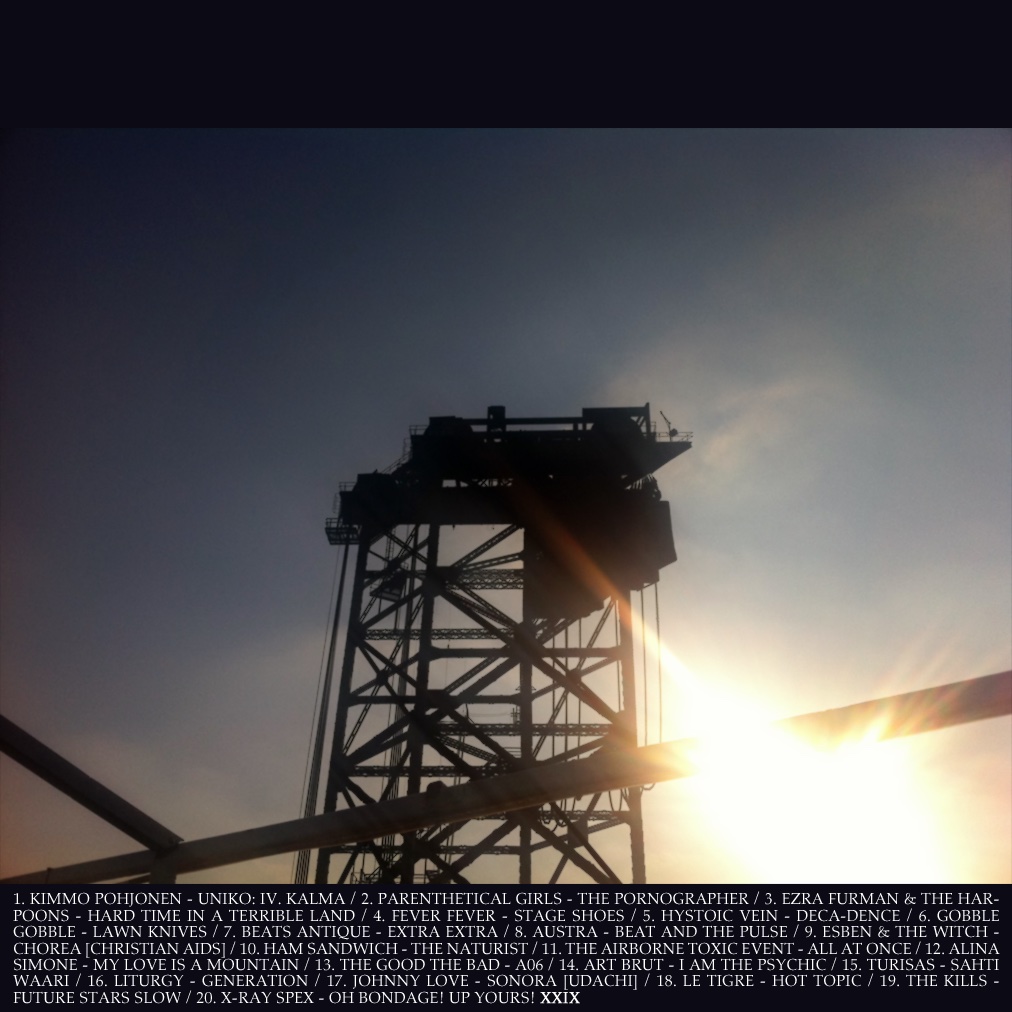
Electroclature Volume Twenty-Nine: XXIX

Part twenty-nine of an array of CD mixes I made for my wife over a long number of years! Read more about it here!


Not to be prideful, but this is when I settled into a new house CD mix design style that I am quite proud of it. When I remarked earlier about wishing I’d gone more of a letterbox way with one design, well, this is when I adopted it. I also settled on the serif font that fit my intent.

I have absolutely no idea where or when I took this photo. I imagine it’s another out-of-the-car-window shot. It’s slightly doctored to give it a bit more pop and an ephemeral look, but the sunburst is real as I don’t bother trying to fake that shit. You either capture it or you don’t.

As usual, it looks better in print as this is a low-res output. The tracklist text is far cleaner. If I had to change anything, I’d find a way to incorporate the XXIX title in a more visible way because — even though I designed this cover — I stumbled while trying to find it upon re-opening it years later.

Let’s move on from metal structures! This mix is all over the place, so let’s skip to the highlights:

ESBEN & THE WITCH! Granted, it’s the remix I love here as the electro staggering and static interplay so well with the ethereal vocals. If I heard this while on a club floor? One moment I’d be swaying like a tree, then I’d be twitching around like an out-of-control puppet.

HYSTOIC VEIN! New wave garage punk, all loud and brash and unapologetic!

THE GOOD THE BAD! Sexy instrumental surfer spaghetti western rock! Not to be crass, but this is my kind of bedroom music.

LITERGY! Saw these folks at — of all places — an outdoor Chicago street fest in the blinding sunlight, which is rather antithetical to their mission statement, but I take what I can get. ‘Generation’ is seven minutes of variations on a hard-hitting theme and I am absolutely here for it.

Can you feel the sunset telling you the tracklist format? (Artist / Album / Song — links go to a video of the song, if available):

  1. KIMMO POHJONEN / Uniko / Uniko: IV. Kalma – Kimmo Pohjonen
  2. PARENTHETICAL GIRLS / Privilege, Pt. III: Mend & Make Do / The Pornographer
  3. EZRA FURMAN & THE HARPOONS / Mysterious Time / Hard Time in a Terrible Land
  4. FEVER FEVER / Keys in the Bowl/Stage Shoes / Stage Shoes
  5. HYSTOIC VEIN / FAKE / DECA-DENCE
  6. BORN GOLD (née GOBBLE GOBBLE) / Bodysongs / Lawn Knives
  7. BEATS ANTIQUE / Contraption Vol. 1 / Extra Extra
  8. AUSTRA / Feel It Break / Beat And The Pulse
  9. ESBEN & THE WITCH / Chorea / Chorea [Christian AIDS] (This video is for the original, not the remix.)
  10. HAM SANDWICH / White Fox / The Naturist
  11. THE AIRBORNE TOXIC EVENT / All At Once / All At Once
  12. ALINA SIMONE / Make Your Own Danger / My Love Is A Mountain
  13. THE GOOD THE BAD / From 001 to 017 / 006 (This particular track isn’t available to stream, so this video goes to a01 from the same album.)
  14. ART BRUT / Brilliant! Tragic! / I Am the Psychic (Audio only as it’s unavailable to stream)
  15. TURISAS / Battle Metal / Sahti Waari
  16. LITERGY / Aesthethica / Generation
  17. JOHNNY LOVE / The Switch / Sonora [Udachi]
  18. LE TIGRE / Le Tigre / Hot Topic (The video here is a live version. Frustratingly, every live version I’ve found excises their shout-outs towards their inspirational creatives for some reason.)
  19. THE KILLS / Blood Pressures / Future Starts Slow
  20. X-RAY SPECS / Oh Bondage Up Yours! / Oh Bondage Up Yours!