MILLENNIUM S02E10: Midnight of the Century (1997) [REDUX]

Merry fucking Christmas, if you celebrate it!

Ready to read about one of the most emotionally devastating Christmas episodes of TV ever? Good.

I’ve previously posted about the Christmas episode of MILLENNIUM, Midnight of the Century, but felt like it needed a deeper look.

A brief summary of the MILLENNIUM series, despite the fact that — like HARLEY QUINN and RATED Q, I will also never, ever shut up about MILLENNIUM — it was a three-season show about intuitive, sensitive FBI profiler Frank Black, embodied by Lance Henrickson’s gruff voice and serious but soulful presence. He has a spiritual sense of premonition, visions, and general human sensitivity and empathy, far beyond most.

In the season that this episode takes place, Frank is no longer with the FBI, but a freelancer. He’s estranged from his wife Catherine and daughter Jordan because of where his abilities have taken him. He’s also disowned his father Henry because he feels that Henry let his wife — Frank’s mother — wither away and die alone.

Similarly, for all intents and purposes, Frank is alone and he’s struggling with that.

This episode — Midnight at the End of the Century — takes place around Christmas. Catherine hands Frank a drawing that their daughter Jordan made. It’s of an angel, and Catherine notes that Jordan said grandma helped her draw it.

Not Catherine’s living mother, but Frank’s dead mother.

This is entirely an episode all about generational and inherited trauma, and the helplessness of the parents who see their brethren walking the same doomed trail as they have, but still wanting and hoping for better. Well-wishing.

Frank: “You know Jordan. She’s just …sensitive.”

Catherine: “Telling me that she colors with her dead grandmother is a little bit more than sensitive.”

Frank: “Come on. You know Jordan. She’s got a gift. You can’t suppress it.”

Catherine: “Your gift gave you a nervous breakdown. This gift makes you see horrible images. It—it’s turned you away from your family, from your daughter. It’s caused you to turn toward the Millennium group.

“Frank, you never even consider that this gift that you have could be lying to you. Because you don’t see yourself withdrawing from your family, hiding behind your… ability.

“If this has happened to you, what is it gonna do to Jordan?

“I want her to have a choice. I want a childhood free from this.

“I want her to know that she has someplace to turn other than within herself…”

Frank: “Like me. Right? It is what it is. There is nothing we can do to fix it.”

Catherine: “… time’s running out.”

All of this provides an impetus for Frank to seek out his estranged father, played by the magnanimous Darin MacGavin (who starred in KOLCHAK: THE NIGHT STALKER, the series that spurred Chris Carter to create THE X-FILES and MILLENNIUM). Frank is seeking an explanation as to why he believed his father cruelly locked his wife in a second floor bedroom until she died.

As you might suspect, the answer he receives is more complicated than that.

I do not want to spoil matters in the off-hand chance you wrangle a copy of this episode, but I do want to note that there is a significant plot point regarding tiny ceramic angels bestowed by the packaged tea that they routinely buy.

You have to have been a specific age and have a specific sort of parent to have remembered these sort of tea-centric figurines. If you bought a box of Red Rose Tea, you’d receive a Wade Whimsey, a small, themed ceramic figure.

My mother collected them and they stood in a glass cabinet in our dining room, looking over us as we supped. So, yeah, you could say that this episode really hits home for me, and I’ve never seen any other work mention them, much less lean on them as a significant plot point, and definitely not as a Christmas-centric endearment.

This episode has Frank — yet again — wrangling with his past. However, this time it’s a moment of reconciliation, one of understanding, of letting go.

Midnight of the Century is a soulful and emotional episode that leaves the viewer worrying about how inherited traits might complicate their life going ahead, while also mulling over the fallout of said traits, how denial of said traits by the progenitors might affect their brethren, and simply living with one’s self.

Is it Christmas-y? I’d argue it is. What is Christmas if nothing else but acknowledging and living with the fallout and repercussions of Christ being born?

Is it full of cheer? No, not at all, but there is a very specific sort of peace that comes with it, even if it is full of hopeful sorrow.

Merry fucking Christmas.

LAKE: SEASON’S GREETING (2023)

I’ve previously penned about Whitethorn Games and Gamious’ cozy mailperson game LAKE and, just in time for the holidays, they’ve released the substantial expansion (to use the parlance of the 90s) LAKE: SEASON’S GREETINGS to further the adventures of the Weiss family and their letter-carrying duties.

To quickly summarize LAKE: it’s the late 80s and you play as Meredith Weiss, returning to her hometown of Providence Oaks, Oregon. Her father is the town mailman, but unable to tend to his duties so Meredith takes up his route while trying to suss out what she wants in life.

Interactively it’s very low-stakes, but emotionally it’s high-stakes. Catnip to me.

It’s structured around days that often open and close around phone calls or just winding down, the intermediate time spent running mail-centric errands. Dropping off packages or letters while musing over the future of her life. That’s it. That’s the game. Cozy as fuck, but still supremely narratively substantial.

LAKE: SEASON’S GREETINGS follows the same structure, but instead of playing as Meredith, you’re playing as the original mailman: her father Thomas.

Meredith was supposed to come home for Christmas but she gets stuck debugging the video game she’s working on. Her parents are frustrated but understanding, and they go about their lives.

Similarly, you’re delivering mail to all of the same townfolk as Meredith did — the queer movie nerd, the grouchy general store shopkeep, the wistful bookstore owner while interacting with your slightly sketchy gambling addict co-worker. It just takes place a bit later in life, right around Christmas.

What results is the same gameplay loop as before, but doesn’t feel quite as substantial. While LAKE was a cozy game, there was a sense of tension, of ennui with Meredith. Thomas, on the other hand, is perfectly comfortable just doing the same thing, day after day, letters in mailboxes, packages dropped off, coming home to his loving wife and reading on the couch until he has to wake up and do the same again.

The sole sort of narrative friction is that of folks in the town questioning whether they should stay in Providence Oaks or move along to another phase of life. I admit: few games would even think of considering broaching that subject! (NIGHT IN THE WOODS is one, though.)

This feels more like an afterthought, though. While Thomas’s wife Emily mentions moving elsewhere, it is very much ‘what if?’ speculation. Yes, that fits with the game’s non-confrontational vibe, it lacks the dramatic undercurrent of Meredith’s internal conflict. Thomas is feeling action from others, rather than born from any sort of personal agency.

DLC and expansions are often used as a way to push the boundaries of the pre-existing game — THE ELDER SCROLLS IV: SHIVERING ISLES is a perfect example of this, where it goes from being a relatively grounded medieval fantasy, then dives directly into surrealism — whereas SEASON’S GREETINGS hedges back instead of pushing forward.

I realize I’m grousing a lot and that’s because I loved LAKE so much, and SEASON’S GREETINGS is a very substantial add-on as opposed to just, say, two more hours of mail delivery. It could very well be a separate game and no one would notice if they hadn’t played classic LAKE.

Emotionally, it doesn’t hit me as hard as classic LAKE did.

That’s fine! I loved playing SEASON’S GREETINGS! Right now, all I want to do is play cozy games, and this hits the spot. I loved reuniting with the folks of Providence Oaks. I loved playing matchmaker. I loved caring about how I drove around because I adored the town and the mail van.

As usual, given the fact that it takes place in Oregon, the environment, the locale, and those who inhabit it reminds me of LIFE IS STRANGE and also my home state of Vermont, it — well — it took me back to a younger me. That’s not nothin’.

LAKE: SEASON’S GREETING gives you more of the same, albeit slightly watered down, but that’s perhaps by intent; it’s Christmas, and many of us don’t want more melodrama foisted upon us. Grab a cup of cocoa and tuck in.

LOOKINGGLASS ALICE (2022)

Author’s Note

This is a post I initially penned last year, but never quite got around to finishing because, well, there was no way anyone could see it as the production had closed and there are usually a number of years between when it’s produced again. However, now you can stream it via the WTTW website!


Those around me know I’m a curmudgeon when it comes to ALICE IN WONDERLAND. It’s not because I believe Lewis Carroll’s story is overrated trash best left in the past. That would be foolish. It is a brilliant foundational text; a complex piece that entertains and enlightens no matter your age.

However, I do feel that referencing ALICE hallmarks are often used as an artistic crutch. Someone slaps a ‘DRINK ME’ tag into a work or mentions ‘rabbit hole’ and it’s meant as a wink and then all of the sudden the work takes on a deeper meaning without having to imbue your own.

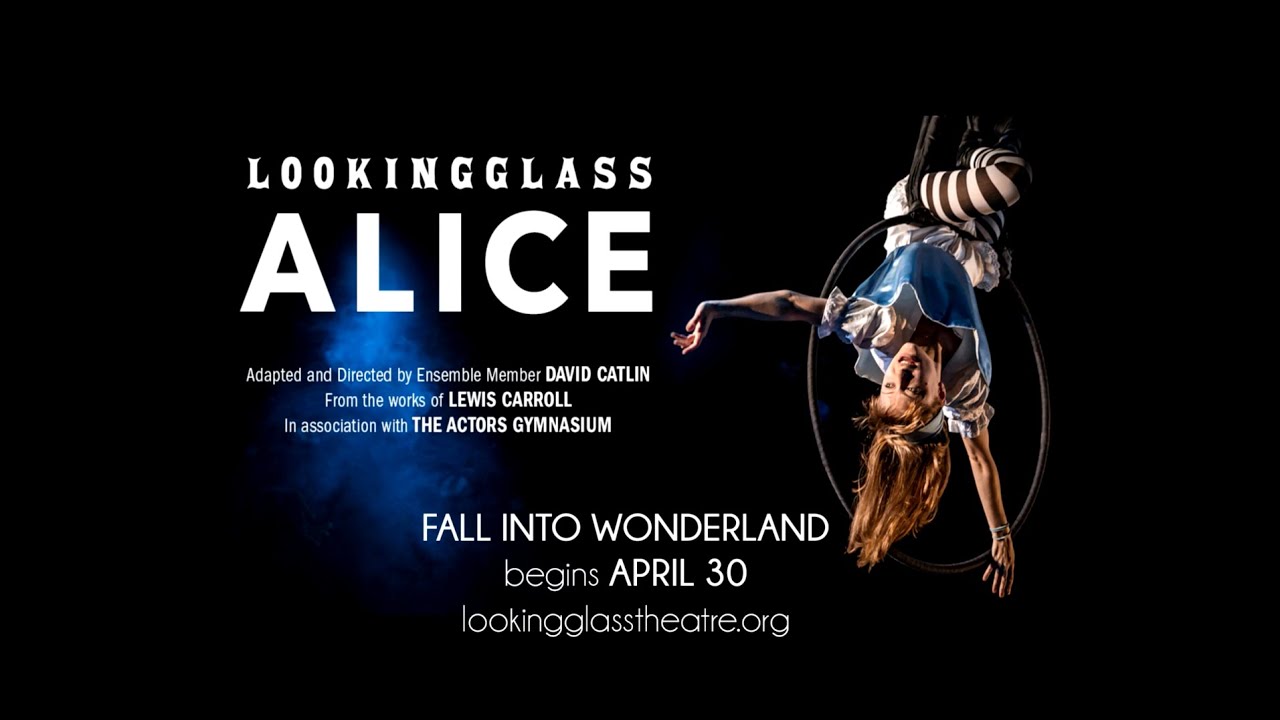
So, last year when I read that Chicago’s LOOKINGGLASS THEATRE was reviving their signature take on ALICE IN WONDERLAND — LOOKINGGLASS ALICE — I reluctantly resigned myself to attending, albeit to their final performance on a lazy Sunday afternoon. I was surrounded by painted-up wide-eyed youths and then I remembered that oh, right, ALICE IN WONDERLAND is first and foremost a cautionary tale for youths, one that’s mostly been reappropriated by adults for the reasons listed above.

Like I said: I am a curmudgeon.

If you aren’t familiar with LOOKINGGLASS THEATRE, it’s a relatively small but celebrated Tony-award winning theatre. It can accommodate a few hundred folks and is located in downtown Chicago, in the infamous Chicago Water Tower, part-and-parcel of the legacy of the Great Chicago Fire that razed most of the city. However, the limestone-constructed Water Tower survived.

LOOKINGGLASS is a theater-in-the-round in a maximal way; they don’t constrain themselves to the main floor, but frequently utilize the entire space, weaving their way through the audience to the rafters before sinking into the subterranean basement.

As you might suspect by the name, LOOKINGGLASS ALICE is “one of their signature shows”, and what a show it is. Not only is it extraordinarily physical and features numerous upbeat songs, it is often very melancholy, even when reveling in acrobatics and circus spectacle and elaborate, inventively whimsical costumes.

There’s one scene where Alice ascends before going down the rabbit hole and the actor grabs and grapples through three tiers of rope, all swinging and twisting and twirling and contorting herself while singing at the same time. It is jaw-dropping and intensely emotion and satisfyingly effective.

While the production traffics in a lot of expertly crafted kid-pleasing numbers that some might find abrasive and somewhat puerile — such as ones from TweedleDee/TweedleDumb and The Caterpillar — those numbers serve to heighten the reflective bits.

One personal note: there’s a scene where the White Night is talking to Alice. He removes his elaborate helmet and hands it a front-row audience member. For that final performance, I just happened to be that audience member.

After three months of very sweaty performances, it was very fragrant. Also, it was very warm.

The White Knight exits the scene and doesn’t return for some time and when he does, he climbs onto an extremely tall unicycle, riding around the stage all while talking at Alice.

After holding the helmet for a good ten or fifteen minutes, I wondered whether it was a production error because, again: final performance, Sunday afternoon. It wouldn’t be the first time I’ve seen performers flub a line or miss a mark or be visibly hungover during the last show.

You can find out for yourself whether it was or was not an error, and you don’t even have to visit Chicago or even leave your house to do so! Our local PBS station WTTW aired a finely produced live-with-audience production of LOOKINGGLASS ALICE that was recorded last year. You can stream it at the WTTW site!

Regarding Turner Classic Movies

I’m taking a rare moment to not offer a suggestion, not offer a recommendation, but to grouse.

I’ve been watching the cable channel Turner Classic Movies (TCM, as it’s more colloquially known as) for decades. For those with modern cable packages, it may shock you to learn that when I first moved to Chicago as a older teen, it was included in the most basic cable package I could afford. I’d constantly watch it, and still do. It is on practically 24/7 in our household. I attended one of the handful of TCM nationwide screening events — it featured an in-person one-on-one interview with original TCM host Robert Osborne (R.I.P) and Jane Powell (R.I.P.). I’ve glowed while attending the TCM Fest in Los Angeles. I’d been attending Noir City film events hosted by Eddie Muller for years before he was brought in to program Noir Alley. I have so many TCM enamel pins. (So many!)

TCM has always been a cultural staple for me, letting me revisit beloved films as well as giving context and informing me as to works I overlooked in the past.

To say TCM has undergone a transformation recently would be an understatement.

(I will note: there are a lot of old-school TCM viewers who constantly complain whenever anything newer than from the 1950s is played. I am not one of them. Classics are classics, no matter the time period. The 90s were thirty years ago, and those films deserve the same recognition as anything from the 30s. Also? TCM still mostly plays films from the 30s-60s. Anything later — or even earlier! — is rare.)

Several years ago, they went under a significant redesign, one that was meant to modernize the network and the brand. It no longer has a cozy patina but instead all of the bumpers are all high-contrast, black backgrounds and neon-icons, laid upon overly exuberant 30-second musical quips. Given that TCM has a surprisingly high number of youthful viewers, that’s not surprising and, while I found it slightly too bright and boisterous, it was immaculately designed and I had no problem rolling with it.

Within the past year, however, I’ve found the channel to be lackluster. While, yes, TCM traffics in replaying old-favorites, they’ve taken to replaying them within a few days of each other which is tiresome and antithetical to the brand. Warner Bros. killed off TCM Underground, the 15+ year-old cult block that ran late-night on Fridays, programmed by the brilliant Millie De Chirico. Cult films are what drive film as a medium forward and youths need an informed voice to learn from. Warner Bros. fired practically everyone who made TCM into the singular filmic channel that people love. (Thanks to folks like Spielberg and Scorsese, they did re-hire a few of the higher-ups, but certainly not enough.)

I’ll also note that I am still very upset at how they treated their first woman host, Tiffany Vasquez, who was removed from TCM relatively quickly. Was she a bit awkward out of the gate? Sure, but who wouldn’t be?! She had an energy and verve and I firmly believe she would have been a great host if she were given some time to settle into the role.

While I do have issues with how they’ve treated their hosts, I do want to extoll the current hosts:

Ben Mankiewicz is so winsome and gregarious but also very generous.

Dave Karger is the musical/theatre nerd you want in your corner.

Alicia Malone is perhaps the least visually static host in televisual history — she changes looks and hair colors every few weeks — and I love that as well as her insight.

Eddie Muller, well, I already talked about him but I will note that I have met him. He loves to talk just as much as he does on Noir Alley and for as many words as he spills in Noir Alley segments? I know he has at least three times more he’s champing at the bit to spit out.

Last, but definitely not least, motherfucking Chicago’s own Jacqueline Stewart, doing the work to call everyone’s attention to silent films and under-appreciated Black cinema.

I also love a lot of the production design and cinematography updates of the intro/outro segments! Granted, a few of them — specifically the very robotic camera movements for intros/extros — were clearly done because of the pandemic, however they were much needed. The prior efforts had the sheen of 90s video.

However, the channel has become noisier, glossier, and has lost most of its idiosyncrasy. It feels more like AMC in the days before MAD MEN and THE WALKING DEAD, like they’re just tossing on whatever they have available without any sense of theme or engagement. The highly stylized and tautly edited commercials advertising the monthly features that were unlike anything else on TV are no longer. My wife and I would routinely dissect those montages, and I’d break down each featured film for her because I have that vocabulary. That doesn’t happen now.

I realize that brands need to keep up with the times, but TCM was a stalwart. It was reliable and cozy. It wasn’t just a cable channel; it was more like a televisual friend that you could always depend on. That’s no longer the case.

I’ll note that the cheap TCM subscription I had many, many moons ago no longer exists. Comcast/Xfinity realized pretty swiftly that TCM subscribers will do anything to keep their channel, and they had the audacity to move it to the most expensive package, their upper-tier sports package — which is fucking ridiculous because TCM viewers? Not known for loving sports! But they’ll force film fans to subsidize the outrageous prices to broadcast sports! — and, unlike other cable channels, you cannot pay for it à la carte. (I will note: some TCM offerings are available via Max and the streaming Criterion Channel.)

For the first time ever, I’m thinking of ditching TCM. Because I’m a big film nerd, I own a lot of what they already play, but I love playing a personal game where I walk through the living room and glance at the TV and try to guess the film playing. (I’m pretty good at that game, if I do say so myself!) However, nowadays, TCM just makes me long for the days of old, which is depressing, even if it makes me sound like a curmudgeon.

It’s disheartening. As you can clearly read, I’ve loved TCM, but it’s become a shadow of itself, as so much of everything around me nowadays. If there’s anything I’ve learned over the years? When you feel that tug where you’re being taken advantage of, when you aren’t quite getting what you want out of an exchange? Fucking move on and don’t look back.

I just never expected I’d have to do that with TCM.

LES MISÉRABLES (2012)

I will fully admit: I am not the biggest LES MISÉRABLES musical fan. I think it’s a rather ramshackle spectacle with a few good numbers and set-pieces. It’s fine. I don’t hate it. I don’t love it, either.

Additionally, I’m not a huge fan of the most recent director to adapt Les Miz, Tom Hooper, despite my endorsement of his version of CATS. If you’ve read about the endless labor he put into his Les Miz adaptation, you’ll probably see that it was a lot of over-exacting bluster. Did he really need all of those terribly sensitive microphones? Nope. The embedded cameras in the set walls? Nope. Especially since they cast fucking Russell Crowe, because no amount of technology could do a damn thing to help that sweaty, ham-fisted job he turned in as Javert. (Even he admits he was ill-suited for the job.)

To quote Lawrence Olivier reprimanding Dustin Hoffman, who endlessly ran to physically wear himself out for his role in MARATHON MAN: “Dear boy, it’s called acting.”

“There was a time when men were kind, when their voices were soft and their words inviting…”

However. I fucking love Anne Hathaway’s portrayal of the fallen woman Fantine, specifically her rendition of I Dreamed a Dream. I endlessly return to it. It’s absolutely heartbreaking. If you aren’t moved by it? Well, sorry to say, but you are a monster. I know some give her grief because of her vocal skills — I’m not the best judge of that — but goddamn, she makes the most of her features, all huge sad and angry eyes and lashes and brows and full-but-cracked lips, and she emotes wildly.

“…there was a time when where the world was a song, and the song was exciting…

“…there was a time… then it all went wrong…”

It’s an absolutely brutal, wrenching number that Hathaway executes perfectly and it tears me up every time I watch it, and almost justifies Hooper’s exacting work as the intensity displayed plays far harder here than in any production of Les Miz I’ve seen.

“I dreamed that God would be forgiving.”

The way she is framed, how she’s essentially housed in an unclosed coffin, the way her hair is shorn; she’s singularly naked, and her fraught voice reflects all of that, a life lost, a life spent, a life overlooked by others, but she’s trying her damndest to give voice to her frustration as well as her resignation.

“…as they tear your hope apart! As they turn your dreams to shiiiiiiiiiit.”

(Yes, I know the actual lyric is ‘shame’, but really. Come on. You know that’s what she wants to say.)

“…life has killed the dream… I dreamed.”

While this post is mostly about I Dreamed a Dream, I’d also like to call attention to Eddie Redmayne’s performance in One Day More. The way he whips the red fabric in ‘One Day More’ is not just commanding, but awe-inspiring, and he does have the necessary voice, all bold and brash and loud. He’s very much a theatre nerd, and that is crystal clear here.

Is this the best Les Miz? No. Is it even a good Les Miz? Beats the fuck out of me! I watched this far too late in my life. This is a musical that one becomes enraptured with in one’s teen years as it’s all emotion, all fraught with rebellion and idealism and being boxed in by higher powers.

However, I keep coming back to it. It is strikingly shot and, while I normally eschew the oh, 20+ years of desaturated colors in film, it makes sense here in that it conveys the grime of France and downtrodden at that time while also letting the reds pop, focusing on the hues of the French flag.

It’s a work that haunts me and it’s worth watching for those few very earnest, honest scenes that encapsulate the hurt, the brutality, the abuse and sacrifices that some have to endure to keep living.

THE CRITIC: A Little Deb Will Do You -S01E05- (1994)

There are a number of jokes that have been stuck in my head for years, but this one joke from the animated show THE CRITIC — a show created by some of the best writers and producers involved with the heyday of THE SIMPSONS — is one of my absolute favorites.

This is all you need to know going in: A young woman is being fitted for her debutante reveal. She is Margo, a liberally-minded teen who eschews this blue-blood practice she was born into but feels pressured to participate in. While being fitted for her reveal dress, the following exchange occurs between the dressmaker and herself.

“We dressmakers have a very strict code, so I need to know: Do you deserve to wear virginal white? Because if you don’t, you’ll have to wear an off-white, what we call a ‘hussy white’.

“So, which will it be? White-white?”

“…yes. Um, except for the gloves.”

I watched this episode when it first aired and was old enough to realize just how smutty the joke was and could not believe it slipped through broadcast standards & practices. I will not spell the joke out for you, as I give you enough credit to have a prurient imagination.

This joke has everything I could ever want: it’s far filthier than it initially sounds, it has a rare sense of specificity, it is loaded with cultural and sexual commentary, and the voice reading cleverly underplays all of the above. It is a brilliant twenty seconds of animated network television.

(If you don’t believe me, check out the YouTube comments on the link at the bottom, as I’m not the only one who fondly remembers this joke!)

I am in the thick of National Novel Writing Month and my novel this year is specifically focused on a bridal dressmaker and her clients. While this is a debutante reveal dress, it works in very much the same way as a bridal dress in that it is often meant to visually exemplify the best of you, as well as make the person wearing it feel imbued with the best of themselves.

I previously only thought about this joke once a month. Now I think about it every fucking day. (Don’t worry, I don’t even come close to involving any ‘hussy’ notions in said novel.)

(Eventually I’ll write a more involved post about THE CRITIC. For now? This will do.)

Unfortunately there’s no single clip available of it, but you can see it via tubi or on YouTube before a DCMA claim takes it down. (UPDATE: It’s now private. Sorry.)

PIECES OF APRIL (2003)

Thanksgiving is one of the few holidays where the experience is radically different if you live in a rural area or suburban area versus an urban area, especially if you are a shitheel 20-something and away from home.

In rural and suburban areas it’s a communal, often familial affair; almost routine.

In urban areas and far from family, you have a tiny kitchen that is absolutely not equipped for preparing the amount of food folks expect for Thanksgiving and, if you are in your 20s, you have absolutely no fucking clue what you’re doing, but no one else is doing the work so it’s up to, and you have no one to guide you.

There aren’t a lot of great Thanksgiving films out there, perhaps because the stress of a Thanksgiving dinner is equally mirrored and amplified by preparing a Christmas dinner. (A CHRISTMAS STORY is probably the best example of this, even though it’s solely about making a meal for immediate family as opposed to an extended family.)

PIECES OF APRIL is one of the few great Thanksgiving films. It focuses on the dichotomy between rural and suburban and urban expectations, of young adults trying to live up to the expectations of being fully-functional adults, even if they have been or currently are fuckups, while attempting to prepare an adult meal for everyone to enjoy, while also being not at all capable of doing so.

I know, because I’ve certainly been there, but I’m getting ahead of myself.

“I’m the first pancake.”

“What?”

“It’s the one you’re supposed to throw out.”

PIECES OF APRIL is a very succinct depiction of a garbage person — April — trying to get better and attempting to mend the mistakes of their past by using food to apologize for her familial transgressions by inviting her suburban family — including her recalcitrant cancer-stricken mother, bitter about her sickness and April’s actions — to a Thanksgiving day trip to her NYC apartment.

“[We’re making] a good memory!”

“What if it’s not?”

“I promise it will be beautiful.”

“How do you know?”

“Because I told her it had to be.”

“And if it’s not?”

“Then I’ll kill her.”

April quickly realizes that her oven doesn’t work and scrambles through her building, looking for someone, anyone, to lend her some oven time to cook her turkey, often only to find doors slammed shut in her face while her boyfriend warmly traipses around the city in order to find an affordable suit to impress April’s parents. Matters escalate.

Katie Holmes is nakedly honest as April, a troubled youth, the black sheep of her family, the eldest of three children. As a youngster she had a penchant for fire and rebellion and when she had the chance, she ran off to New York City and spiraled into a world of drug dealers and even worse behavior.

PIECES OF APRIL is a perfect depiction of urban life, where many folks just want to live anonymously and are hardened by the rough life of an unforgiving city, but also of young misfits realizing what they put their family through, while also aware that they’re leading a very different life than the one that was expected of them.

The distance between myself and my immediate family is vast enough that I’ve never been put through the pressure cooker that April goes through, but as a fucking piece of garbage youth who moved halfway across the country to one of the largest cities in the U.S., and as someone who — along with my then-girlfriend/now-wife — has hosted my fair share of Friendsgivings and has screwed up my fair share of dishes, this film hits hard.

“You’re a bad girl! A very bad girl!”

“…no. I’m not.”

This was a ramshackle labor of love for writer/director Peter Hedges, shot extraordinarily cheaply — he was paid a whopping $20 for his efforts, and most of the cast worked for under $300 a day — Hedges made the most of it. There’s a visual intimacy here, mostly medium shots or close-ups to capture the emotional fraught nature of her family’s trip, as well as the stress April is enduring. Long shots are reserved for when April’s mom — an acerbic Patricia Clarkson — pushes her family away, rejecting the current situation.

Colors are often muted, although I’ve only seen this film via terrible DVD transfers. It might be intentional, an effort to visually cast a pall over the endeavors, but I might be reading too much into that.

While this summary may make this film sound like a downer, ultimately it’s about perseverance, of folks muscling through to try to do better, to give folks second chances, to showcase the grace that others can give others.

Is Thanksgiving fundamentally a fucking terrible holiday, one celebrating colonialism and downright genocide? Yes, yes it is. Is it terrible that so much of the nation overlooks that in favor for stuffing their faces? Yes, yes it is.

(I will note that PIECES OF APRIL does hang a hat on that, albeit not extremely successfully, but narratively and from a character perspective it makes sense.)

However, hosting Thanksgiving dinners is a rite of passage for many. It showcases that you can provide for others, that you can wrangle the many, many courses and dishes in a way that satisfies everyone and everyone can commune around the table and take comfort in one and another.

You’re living in this moment — a tiny one in the long run of your life — of knowing you’ve provided for those you hold dear and, despite the strife and stress and endless planning, you have a communal bonding moment over your rustic culinary efforts, the table a truce place setting, a few hours that are hopefully conflict-free where you can live in an idyllic familial fantasy of grace.

PIECES OF APRIL ends with a montage of photographs, memorializing the day, recording the above feelings for posterity, not just for the family, but also for whatever comes next. It’s a very simple, no-fuss film, but one that resonates with truth and the hardships of willing the endeavor of bringing everyone to the table, of making the effort in service of others. In other words: the perfect Thanksgiving film.

“One April day we’ll go miles away

and I’ll turn to you and say

I’ve always loved you in my way.

I’ll always love you in my way.”

Stephen Merritt

HAIRSPRAY (1988)

There are two things I will always post about here: 1) Harley Fuckin’ Quinn and 2) Motherfucking RATED Q screenings at Chicago’s Music Box Theatre. (The Q is for Queer, in case you were wondering.) Both bring me endless joy; I live for ‘em in the best way.

The most recent RATED Q screening featured their usual boisterous trifecta of drag performances that introduce and dovetail with the music and fashions of the the screened film, which this month was the original HAIRSPRAY, willed into the world by the patron saint of misfits and the disenfranchised, John Waters.

HAIRSPRAY’s premise is thin, but results in a hell of a lot of fun. It’s the early 60s and voluminous Tracy Turnblad is a teen who loves to dance to modern rock music, especially music from Black artists. She becomes a local star on Baltimore’s premiere TV dance show. (This was back in the day when half-hours of TV were dedicated solely to a host announcing song after song and you’d just watch youths dance to said song.) Tracy then uses her newfound fame to fight injustice against segregation. Matters escalate, backed by an amazing late 50s and early 60s soundtrack.

John Waters is a master of having his cake and eating it too. He loves pop culture, but also often hates what it represents — the homogenization, the alienation of anyone who isn’t white and straight — and he is an expert at weaponizing pop culture to expose cultural hypocrisy and societal injustice.

If you are only familiar with Waters’ more family-friendly films (HAIRSPRAY, CRY BABY, and SERIAL MOM you may not be aware that he’s also a brilliant purveyor of absolute filth, and he’s damn proud of it and rightly so. If you watch MULTIPLE MANICS or FEMALE TROUBLE or DESPERATE LIVING or especially PINK FLAMINGOS, there are moments in all of those films that will haunt you for the rest of your life, scenes that you will never be able to unsee, but also scenes that — even today — will gleefully prompt you to say: “Wait, you can get away with filming that?!”)

He’s one of the few auteurs in true command of his powers as a creative, as opposed to simply forcing his voice on others. He is often unfairly dismissed as camp (although I doubt he’d deny the label), but — depending on your definition — camp is often vacuous and the works live solely for themselves, as opposed to being created for others with something to say. Waters sincerely wants folks to rethink how they view culture and society, and HAIRSPRAY delivers that wholeheartedly in a slobs vs. snobs way that still feels vital 35 years later.

The cast is amazing. Divine, of course, and they do double-duty as both Tracy’s mother and the evil owner of the TV station. Ricki Lake is effortlessly likable as Tracy in her breakout role. Waters wrangled comedic icon Jerry Stiller as Tracy’s father! Pop legends Debbie Harry and Ric Ocasek, as well as general icon Pia Zadora all have extremely memorable moments! And, of course, Mink Stole, often steals the spotlight.

However, I’d love to call attention to the production and set design, which are as equally rebellious as the script and casting. From the candy-colored sets to the faux-TV cameras used during dance tests, everyone was 100% aware that this was a heightened, but somewhat underground, reality. My favorite design decision though, is the facade of the apartment building that Tracy lives in, specifically the graffiti. It literally speaks volumes. Theatrical and dirty, but also visually striking in the way that only the way that graffiti — and film — can be. It’s an amazing feat.

While I’ve waxed on about how subversive HAIRSPRAY is, I need to underscore that this a fucking fun film. It is a film that will make you want to dance, a film that will make you grin, a film you will walk away from feeling satiated, a film that nestles in the uncanny valley of genre in that it leans on all of the expected plot and character beats, while exploiting them and being vibrantly transgressive at the same time. It is a film that only John Waters could will into the world.

ADDENDUM

I’ll note that this Rated Q screening suffered from what I call a Halloween hangover — the exuberance of October peaks, then November crashes the party and you have the realization that: “Fuck, now I have to start thinking about winter holidays and presents and travel and motherfucking Chicago winter”. I was so psyched to see this — so excited! — as it’s a John Waters film that’s wall-to-wall music and I expected a lot of folks singing along and shouting out lines (“I’m big, blonde and beautiful!”) but nope. It certainly didn’t help that I’ve been burning the candle at both ends as of late. That plus my Halloween hangover caused me to nod off halfway through the film instead of hooting and hollering and clapping, which boggles my mind, but it was a thing that happened. Nonetheless, even if I don’t have peak energy, I’ll be there for each and every screening because there’s nothing else like it.

HARLEY QUINN: BREAKING GLASS (2019)

I’ve touched on this in prior posts about Harley Fuckin’ Quinn — as I will never, ever shut up about Harley Fuckin’ Quinn — but I refuse to read or watch or listen to works that involve her in a relationship with the Joker.

It’s a coercion/abuse thing. My Harley — because there are many different Harleys because she is nothing but mercurial and has had many writers — has (mostly) moved beyond that. Read into that as you will.

As usual, I picked up HARLEY QUINN: BREAKING GLASS — penned by Mariko Tamaki (SKIM, THIS ONE SUMMER) with art by Steve Pugh (ANIMAL MAN, HELLBLAZER) — without knowing jackshit about it. It was about Harley and it looked like fun.

I didn’t realize it was considered part of DC’s non-canon young adults imprint which, uh, is boringly named ‘DC: Graphic Novels for Young Adults’. That said, it’s more adult than a number of ‘mature’ comics I’ve read. Also, probably something that if it were on more garbage folks radars, it would probably be banned due to Harleen/Harley being part of a queer found family.

BREAKING GLASS is a twisted fairy tale-ish take on an alternate Harleen/Harley’s teen years (hence the YA label). She was sent by her mother to Gotham City to live with her grandmother because, well Harleen doesn’t take shit and we’ll leave it at that.

(Not-so-brief note: I will be switching between Harleen/Harley to match the use in the book as the best that I can. As someone who did draw a line in the sand at a certain point in my life as to which name I would utilize, most Harley-centric works don’t have to juggle that, so I appreciate that Tamaki respects that and I will as well.)

Harleen found her way to the address of her grandmother’s house, only to discover that her grandmother had died, but had been overseen by the minder of the building called Mama, an older queer who oversees a number of misfits. Gotham City’s YA take on TALES OF THE CITY, if you will.

“And yes indeed, our happy heroine Harleen was happy as a kitten on a radiator.

“She had everything she needed.”

Mama takes Harleen in and Harleen starts attending high school with a bunch of — to use her phrase — boogers, boogers that disgust her because “boogers will always act like boogers.” As Harleen is prone to do here, she acts out, and gets punished for pushing against the bullies and jerks — I mean boogers — of her high school.

However, she does find solace in Mama’s queer community, as well as one fellow student: Ivy, a vegan, anti-establishment activist, and the two form a fast, if somewhat combative bond. Harley learns from her, she grows, she tries to do better and to do more and to be more supportive. (There’s nothing more Harley than her trying to grow from terrible situations, even if she consistently fucks up.)

Eventually, due to her urban reactionary behavior, she’s eventually spotted by ‘The Joker’, basically a similarly ostracized youth who has managed to wrangle a bunch of other youths to do slight terrorist actions to Gotham.

(I will note: his face is not physically altered like in the canon. He wears a mask that exaggerates the already exaggerated canonical Joker look.)

Matters escalate in the way that teen dramas do, and it’s quite fulfilling. This is a fully realized work, from the framing device of Harleen’s scattered fairy tale rendition to the exacting dialogue, to Pugh’s amazing command of color depending on Harleen/Harley’s situation, often only utilizing primary colors, and explode into vibrancy when her emotions rise.

Like all of the best young adult works it transcends ages. If I had nieces? I would totally hand a copy to them. (Not that I wouldn’t hand it off to nephews, but I know my nephews and haven’t handed off a copy.) Harley isn’t exactly the best role model but Ivy is and Harleen is improved by being in her orbit and simply listening to her.

While this isn’t the cavalier Harley of Conner/Palmiotti, it is a great take on the character and an extraordinarily well-executed and well-plotted and well-penned and dynamically illustrated and vividly colored work that deserves all of the eyeballs.

I mean, come on! Just look at that cover! I endlessly return to it because it’s so engaging and encapsulates all that’s Harley! It’s worth picking up solely for that print!

You can purchase HARLEY QUINN: BREAKING GLASS via bookshop.org!

HALT AND CATCH FIRE: Signal to Noise -S04E02- (2017)

HALT AND CATCH FIRE was a very little-watched show about brilliant folks navigating Silicon Valley at the beginning of the personal computer revolution, as well as the burgeoning world of the Internet.

There is a lot of strife on display in the show, especially between Joe who is a wanna-be Steve Jobs with severe emotional issues, played by the charismatic Lee Pace, and Cameron — Cam — an exceptional programmer who also has a creative heart. Mackenzie Davis, who embodies Cam, reflects the spark in one’s eyes when they have a revelation. She adeptly conveys the frustration that she constantly feels, partially because of the modern male-dominated tech industry, but also because she does not like to feel boxed in.

Signal to Noise — the second episode of the final season — encapsulates the heart of the show. Its focus is on a phone call between Cam and Joe. Cam calls Joe late at night because of recent life changes. They start talking. Cam falls asleep on her tethered, corded phone without hanging up. Joe stays on the line via his chunky cellular phone until she wakes up in the morning.

When she does wake up, they talk for hours and hours, learning more about each other, feeling each other out and comforting each other.

That’s the underlying theme of HALT AND CATCH FIRE, that technology can be used to communicate and bring folks together in ways that were previously impossible.

I told my wife that she should really watch this episode, despite the fact that she hadn’t watched much of the show previously.

When she watched it, she remarked:

“That’s us.”


My wife and I first met through friends. It was not matchmaking — she was friends with folks I’d recently met and she was in town for a very short time, but knew she’d return a few months later.

All of us went to an ATARI TEENAGE RIOT show and were showered with Alec Empire’s backwash, which is something you more readily accept when you’re young than say, now.

Matters escalated but not the way you think, and that’s all I’ll say about that.

My now-wife tracked down my phone number via directory assistance, which I doubt you can do now.

I answered the call via a very 90s translucent, candy-colored, nicotine-stained corded phone and we would talk for hours. Not two or three hours, but over ten hours and until dawn, much like Joe and Cam.

We’ve been together for many, many years now. We’ve always worked together, from wrangling bands to putting on club nights, to day drinking while going garagesaling, playing GRIM FANDANGO and SYBERIA together, reading each other’s writing drafts and wrangling fabric and aiding in non-conventional public artworks and even being on TV. We have done a lot together — we have put in a lot of work — and I’m proud of what we have accomplished as partners.

We were married on this very day, ten years ago.

If you’ve read prior posts, you may have noticed that life has been pretty rocky for me these past few years, and not because of the pandemic. (Yes, that didn’t help.) I’ve been dealing with a lot of therapy, a lot of mental processing, a lot of diagnoses, a lot of internal confrontation and recalibration, and a lot of coping mechanisms. Also, my coming out has only added to the emotional weight.

It has been a lot for her to endure. She’s been there for all of it, communicative and supporting and accepting and loving, even if what I’m going through is sometimes confusing.

If it weren’t for her finding me through technology, by calling me up one night, we might have only met that one weekend and never talked to each other again. Instead, through technology, we were able to learn about each other and feel matters out and we’ve been married for ten years now and, hopefully, many more.

“That’s us.”